Last updated: 30 October 2026
Quick Answer: Spend 2 days in Jodhpur on Mehrangarh, Jaswant Thada and the blue old town first, then Umaid Bhawan, Mandore and the bazaars. The Unbored Club, an India-based travel company that designs private, tailor-made India trips, can fit Jodhpur into a wider Rajasthan route.
With 2 days in Jodhpur, the question is less which things to do in Jodhpur than in what order. The fort sits above the old town like a cliff, the lanes below it are painted blue, and the main places to visit in Jodhpur are close enough together that two planned days feel generous. Hours and prices below come from each site's own page, checked on 30 October 2026. Pounds use Visa's published exchange rate for that day, about ₹126.5 to £1.
How should you plan 2 days in Jodhpur?
Give day one to the fort and the old city beneath it, and day two to the palace, the gardens and the bazaars. Mehrangarh, Jaswant Thada and the blue lanes sit together on one side of the city. Umaid Bhawan and Mandore lie elsewhere, so this order means you cross town once, not twice a day. Here is the 2-day itinerary at a glance:
| Day | Morning | Afternoon | Evening |
|---|---|---|---|
| Day 1 | Mehrangarh Fort at 09:00 | Jaswant Thada, then Rao Jodha Desert Rock Park | The blue lanes and the Clock Tower |
| Day 2 | Umaid Bhawan Palace | Mandore Gardens | Sardar Market and a rooftop dinner |
What are the things to do in Jodhpur on day one?
Day one is the demanding one, so start when the gates open. Mehrangarh and Jaswant Thada keep the same hours and are run by the same trust, which makes them easy to pair.
How do you visit Mehrangarh Fort?
Mehrangarh rises from a hill 125 metres (410 feet) above the city's skyline, as Rajasthan Tourism's Jodhpur page puts it. The Mehrangarh Museum Trust's ticket page (last updated 4 April 2025) lists it as open all days, 09:00 to 17:00, with ticket sales closing at 17:00.
An international visitor ticket costs about £6.30 (₹800), or about £3.95 (₹500) for international students. It includes the audio guide. The one-way elevator costs about 40p (₹50).
Inside are seven period rooms, among them Sheesh Mahal, Phool Mahal and Moti Mahal. Six galleries hold howdahs, palanquins, paintings, textiles and arms. Allow the whole morning, and finish on the ramparts for the view over the blue city.
Why stop at Jaswant Thada?
Jaswant Thada is a white marble memorial close to the fort, and it makes a calm hour after Mehrangarh's crowds. The trust's Jaswant Thada page records that it was built in memory of Maharaja Jaswant Singh, who ruled from 1873 to 1895. His son, Maharaja Sardar Singh, completed it in 1906. It opens 09:00 to 17:00 every day, and international visitors pay about 80p (₹100). The trust adds that the main hall is built like a temple, where puja is also performed. A small museum inside shows portraits of the Marwar rulers.
What is Rao Jodha Desert Rock Park?
It is the rocky land around the fort, restored as a desert park. The trust's park page (last updated July 2019) says the park was created in 2006 to restore the ecology of the wasteland beside Mehrangarh. It covers 70 hectares, about 170 acres.
One entrance is the visitors' centre, 800 metres (half a mile) from the main fort gate. Tickets cost about 80p (₹100), and a naturalist-led walk costs about £1.60 (₹200). It opens every day, 08:00 to 17:30 from October to March and 07:00 to 18:30 from April to September. The page is older than the others, so confirm the price at the gate.
What is the blue city walk?
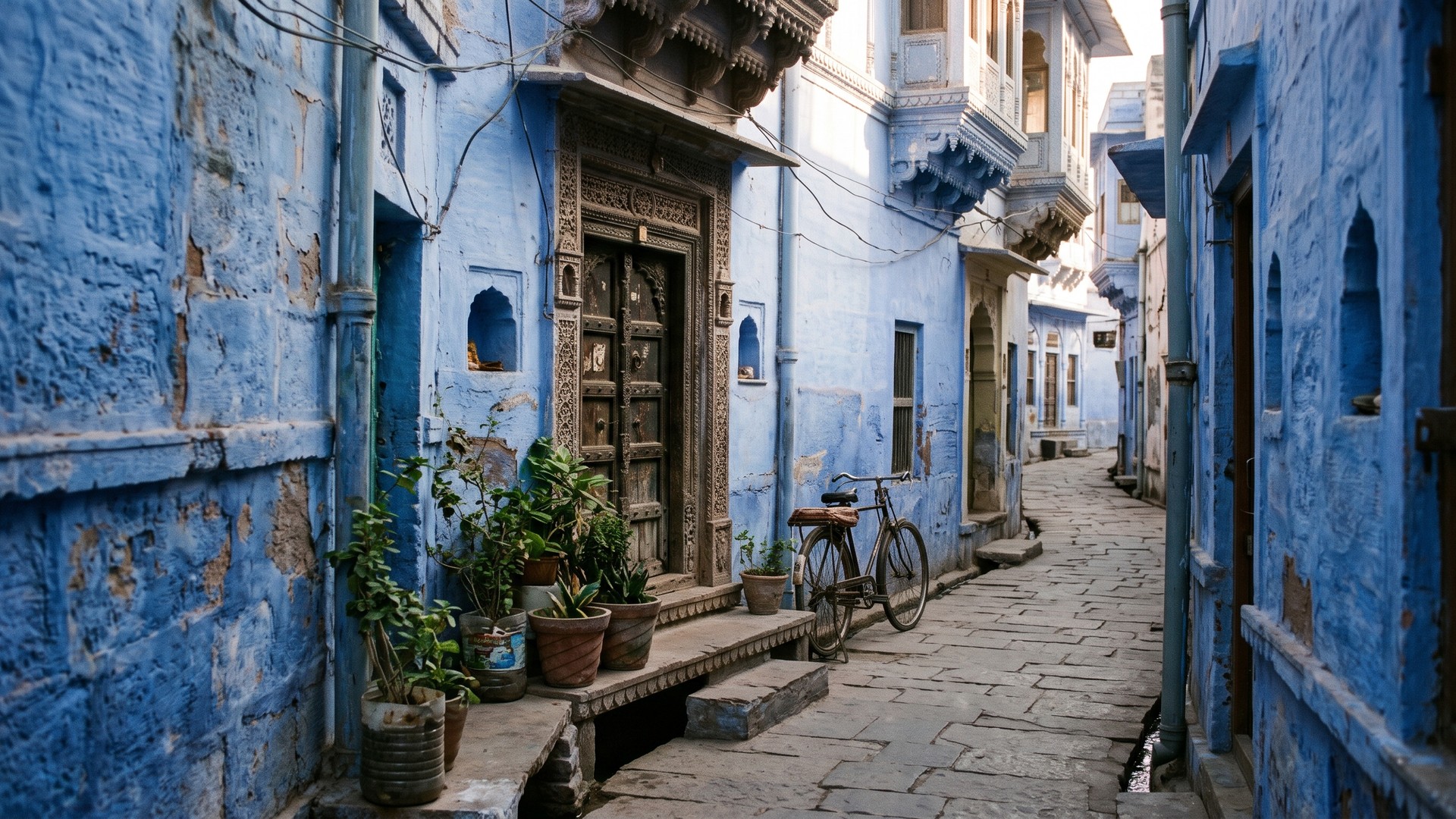
Jodhpur is known as the Blue City because, in Rajasthan Tourism's words, most of its forts, palaces, temples, havelis and houses are "built in vivid shades of blue". The lanes cost nothing to walk, and they make sense only on foot. Rajasthan Tourism names the Clock Tower, or Ghanta Ghar, as the start and end point of a heritage walk through the blue city. Maharaja Sardar Singh built it, and the adjacent Sardar Market takes his name. Toorji ka Jhalra is worth adding to the walk: Incredible India, the Ministry of Tourism's site, describes it as a stepwell believed to date from the 1740s.
What should day two in Jodhpur cover?
Day two slows down and spreads out: the palace in the morning, the gardens after lunch and the market at dusk. It is lighter by design, because day one asks a lot of your legs.
Is Umaid Bhawan Palace worth the morning?
Yes, for the city's 20th-century palace, a blend of Indo-Saracenic, Classical Revival and Art Deco styles. Rajasthan Tourism records that Maharaja Umaid Singh began it in 1929 to counter a famine, and that the British architect HV Lanchester designed it. It took 16 years to finish, in sandstone and marble, and Rajasthan Tourism says it is recognised as one of the largest private homes in the world. Incredible India notes that the palace houses a museum, a luxury hotel and the residence of Jodhpur's royal family. Check the museum's current entry fee at the gate.
What about Mandore Gardens and the bazaars?
Mandore, towards the north of the city, was the ancient capital of Marwar before Jodhpur was founded. Rajasthan Tourism notes the dewals, or cenotaphs, of Jodhpur's former rulers there, and a museum, a temple and an art gallery in the same enclosure. It makes a quiet afternoon if you have had your fill of forts.
Then head back to the Clock Tower for the evening. Rajasthan Tourism calls Sardar Market popular for spices, traditional clothes and jewellery. The guide to India's markets and bazaars explains how bargaining works before you start.
Is Jodhpur worth visiting on a short stop?
Yes, because the main sights sit in and around the old city, so two days give you the city's character rather than a checklist. The trade-off is pace: two days leave no room for the villages beyond the city.
If you want the desert from Jodhpur, add a third day. Osian, 65 kilometres (40 miles) out on the road to Phalodi, has temple ruins from the 8th to the 11th century, a stepwell, and camel rides at sunset on the edge of the village, according to Rajasthan Tourism.
Guda, a Bishnoi village, is described by Rajasthan Tourism as a habitat for thousands of migratory birds, with demoiselle cranes at the lake and antelopes and blackbuck by the pond. The same page names Khejarli as a hub of the Bishnoi community, whose way of life is built around nature, with a memorial to villagers who died protecting khejri trees in 1730. Either village fits into that third day.
A full night in the dunes belongs to Jaisalmer, further west, which the desert safari in Rajasthan guide covers.
How many days in Jodhpur are enough?
Two days cover the fort, the old city, the palace and the bazaars without padding. One night covers Mehrangarh and a quick walk through the lanes, and little else. A third day suits Osian, a Bishnoi village or slower mornings.
When is the best time to visit Jodhpur?
October to March is the season for Jodhpur, as it is for Udaipur. Rajasthan Tourism's best-time page says winters usually run from October to January, at 10°C to 30°C for most parts of the state, and that summers can reach 48°C. Jodhpur itself runs warmer at the edges of that window: the India Meteorological Department's 1991-2020 averages give daytime highs of 36.1°C in October and 33.9°C in March, against 25.1°C to 28.4°C from December to February. July to September brings most of the year's rain, about 289 mm on the same averages. Udaipur, a lake city in the south of Rajasthan, is the usual next stop; the guide to Udaipur covers its own days. For UK families, October half term falls inside the winter window.
What are the common mistakes with 2 days in Jodhpur?
A few predictable errors eat into a short stay:
- Reaching Mehrangarh at midday. It opens at 09:00; arriving then leaves the afternoon free for Jaswant Thada and the park.
- Skipping the audio guide. International tickets already include it, so leaving it unused wastes part of the fare.
- Driving through the blue city. The lanes only work on foot, and the Clock Tower is where the heritage walk starts.
- Sleeping far from the old town. Traffic eats into two days; a stay near the Clock Tower puts the old town and the bazaars within walking distance.
- Leaving shopping to the last hour. Sardar Market deserves an unhurried evening, not a dash before the airport.
How do you get to Jodhpur from the UK or the US?
A straightforward route is a flight into Delhi or Mumbai, then a domestic flight. Rajasthan Tourism notes that Jodhpur is connected to both, and that its airport is about 5 kilometres (3 miles) from the centre.
- From the UK: fly to India, connecting to Jodhpur via Delhi or Mumbai.
- From the US: the same pattern applies, connecting via Delhi or Mumbai.
- Visa: apply on the Government of India e-Visa portal at least four days before arrival. The portal says travellers of Pakistani origin, or with a Pakistani passport, cannot use the e-Visa and should apply for a regular visa at an Indian mission. At the time of checking, its fee table lists, for British citizens, US$25 (about £19) for a 30-day e-Tourist Visa from July to March and US$484 (about £361 at the ECB rate for 30 October 2026) for five years. For US citizens the five-year fee is US$160. A 3% bank charge applies to card payments.
- Advice: read the FCDO's India travel advice, last reviewed on 7 October 2026, before you go.
Where does Jodhpur fit in a wider Rajasthan trip?
On the usual route, Jodhpur comes between Jaipur and Jaisalmer, with Udaipur reached overland. The two-week Rajasthan itinerary shows how the four cities fit together without the trip becoming a race between hotels.
The Unbored Club designs private Rajasthan trips from scratch around each traveller's dates, interests and pace, and its Rajasthan planning page is where to start if you want Jodhpur built into a route designed around you. Because its team is based in India, there is no overseas middle layer: you deal directly with the people who know Jodhpur's makers, cooks and back lanes, and who are close by if a plan changes. To start the conversation, send your dates through the trip enquiry form.
A few quick questions so we can design something truly personal for you.
