Rishikesh is famous for yoga, but the town has a quieter, older heartbeat: sound, water, fire and a flute played at dusk over the Ganges.
Yes, Rishikesh is worth a first-time visitor's time even if you never step onto a yoga mat. This small Himalayan town in northern India is best known for yoga, but its quietest pleasures happen around a class, not during it: a sound-healing session, a flute drifting over the river at dusk, the sunset Ganga aarti (a fire ceremony on the river steps), and long, unhurried afternoons by the Ganges. Give it three to four nights, come between late September and April, and let the pace do the work. Here is the calmer Rishikesh most visitors miss. The months matter here, and our month-by-month guide explains why.
Most people arrive in Rishikesh with one word in mind, and that word is yoga. It is a fair association. This town in the Himalayan foothills of Uttarakhand has been a place of practice and pilgrimage for centuries, and the wider world discovered its yoga in the 1960s, when the Beatles came to study meditation here. But if you come only for the mat, you will see the surface and miss the town.
The real Rishikesh reveals itself in the hours around a class, not during it. It is in the sound bath that leaves your chest humming, the flute that drifts across the river at nightfall, the fire ceremony on the ghats (the stone steps down to the water), and the long afternoons when the Ganges does most of the talking. I have sent many first-time visitors here, and this is a guide to that Rishikesh, the one that stays with you.
Where is Rishikesh, and why is it called the spiritual heart of the Himalayas?
Rishikesh sits in the state of Uttarakhand in northern India, where the river Ganges leaves the mountains and reaches the plains. It is roughly a six-hour drive or train ride from Delhi, and about half an hour from the pilgrim town of Haridwar. The nearest airport is Dehradun (Jolly Grant, code DED), around 35 minutes away. This is where the Himalayas begin. It is also the easiest Himalayan addition to a north India itinerary.
It earns the title for two reasons. First, geography. Rishikesh is the traditional gateway to the Char Dham, the four sacred mountain sites Hindu pilgrims have walked towards for generations. For many, the journey into the Himalayas starts here. Second, atmosphere. The town is vegetarian and alcohol-free by custom, dense with ashrams and temples, and wrapped in the sound of bells and chanting from dawn. You feel the shift the moment you cross a footbridge over the river. The pace drops. The noise changes character.
Is Rishikesh only about yoga?
No. Yoga is the reason Rishikesh is on the map, and the practice here is genuine and deep, but it is one thread among many. It sits alongside meditation, sound healing, river rituals, Himalayan walks and simple riverside stillness. For longer walks from the same foothills, see our guide to trekking in the Himalayas.
The yoga is worth taking seriously. Many of the twentieth-century teachers who shaped modern practice studied and taught here, and the town holds an International Yoga Festival at Parmarth Niketan ashram each March. You will find everything from gentle beginner Hatha in a garden to demanding Ashtanga in a proper shala (yoga hall). My honest advice is to choose a teacher and a lineage rather than a photogenic rooftop, and to sit at least one class you find difficult. That is where the practice actually lives.
But treat yoga as your anchor, not your whole itinerary. The experiences that move travellers most here are the ones with no branding and no schedule board outside the door. That is what the rest of this guide is about.
What are the best things to do in Rishikesh beyond a yoga class?
Rishikesh rewards travellers who slow down and stay a few days. Here are the experiences that give you the town rather than just its postcard:
| Experience | What it is | How long | Best time |
|---|---|---|---|
| Ganga aarti | Sunset fire-and-song river ceremony | ~45 min | Dusk, daily |
| Sound healing | Guided rest with singing bowls and gongs | 45–90 min | Any day |
| Meditation sitting | Guided or silent stillness by the river | 20–60 min | Early morning |
| Yoga class | Hatha to Ashtanga, all levels | 60–90 min | Morning |
| Ram Jhula walk | Footbridge over the Ganges | 20–30 min | Early morning |
| Himalayan walk | Waterfall or valley-viewpoint trail | Half day | Morning |
| White-water rafting | Grade I–IV rapids, in season | Half day | Sep–Jun |
A few notes on that list. Walk the Ram Jhula footbridge early, before the crowds, when the light is soft and the monkeys are the main traffic. (The older Lakshman Jhula bridge has been closed since 2019 for safety and is being replaced by the new Bajrang Setu glass bridge at the same spot, so check what is open when you visit.) And do not skip the simplest thing of all: a chai (spiced Indian tea) at a riverside cafe, watching the current. It counts. It may be the most Rishikesh thing you do.
What is a sound-healing session in Rishikesh actually like?

You lie still while a practitioner plays singing bowls, gongs and chimes, you do nothing but listen.
A sound-healing session, sometimes called a sound bath, is a form of guided rest where a practitioner plays instruments such as Himalayan singing bowls, gongs and chimes while you lie still with your eyes closed. In Rishikesh these are common, often held in small studios or ashram halls, and usually last between forty-five and ninety minutes. You do nothing but listen.
It is calmer and stranger than it sounds on paper. You lie on a mat, a blanket over you, and the first bowl sounds. The tone is low and it does not stop when your ears expect it to. It hangs in the room, and you feel it as much as hear it, a faint vibration up the length of your spine. There is no instruction to follow, no breathing to count. After twenty minutes the thinking mind, the one that plans and lists and worries, tends to go quiet, not because you forced it but because there is nothing for it to do.
People react differently. Some fall close to sleep. Some feel a wave of unexpected emotion, which practitioners treat as normal and welcome. Most simply come out softened, moving a little more slowly. I would not oversell it. What it reliably offers is deep rest, which is rarer than it should be, and a way of paying attention many of us have forgotten. Expect to pay roughly ₹800 to ₹2,000 (about $8 to $21) for a session. If you have never tried one, Rishikesh is one of the more natural places in the world to begin. If wellness is the reason you are coming, our guide to authentic Ayurveda in India is worth reading too.
The flute at dusk: what is the evening river ceremony?
As the light goes at the end of the day, Rishikesh gathers at the river. The best-known ritual is the Ganga aarti, a ceremony of fire and song offered to the river at sunset. The town has a softer companion to it too: the sound of a flute played over the water as the sky turns.
The aarti is open to everyone. At Parmarth Niketan ashram, on the Ram Jhula side, priests and students in saffron gather on the steps as the sun drops. There is chanting, a fire is circled in slow arcs, and small leaf boats holding a flame and marigold petals are set onto the current. You watch dozens of these lamps drift downstream and out of sight. Nobody is performing it for tourists, which is exactly why it lands.
Around and after the ceremony you will often hear the bansuri, the bamboo flute that carries so much of Indian devotional and folk music. Sometimes it is a musician on the ghat steps, sometimes it drifts from a nearby ashram. A single flute over moving water at dusk, with the foothills going dark behind, is one of those small experiences no monument can match. I often tell travellers to skip a second temple in the afternoon and simply hold this hour instead. One note of respect: this is a living religious ceremony, not a show. Sit where locals sit, keep your voice down, and ask before photographing people up close.
Where does meditation fit into Rishikesh?
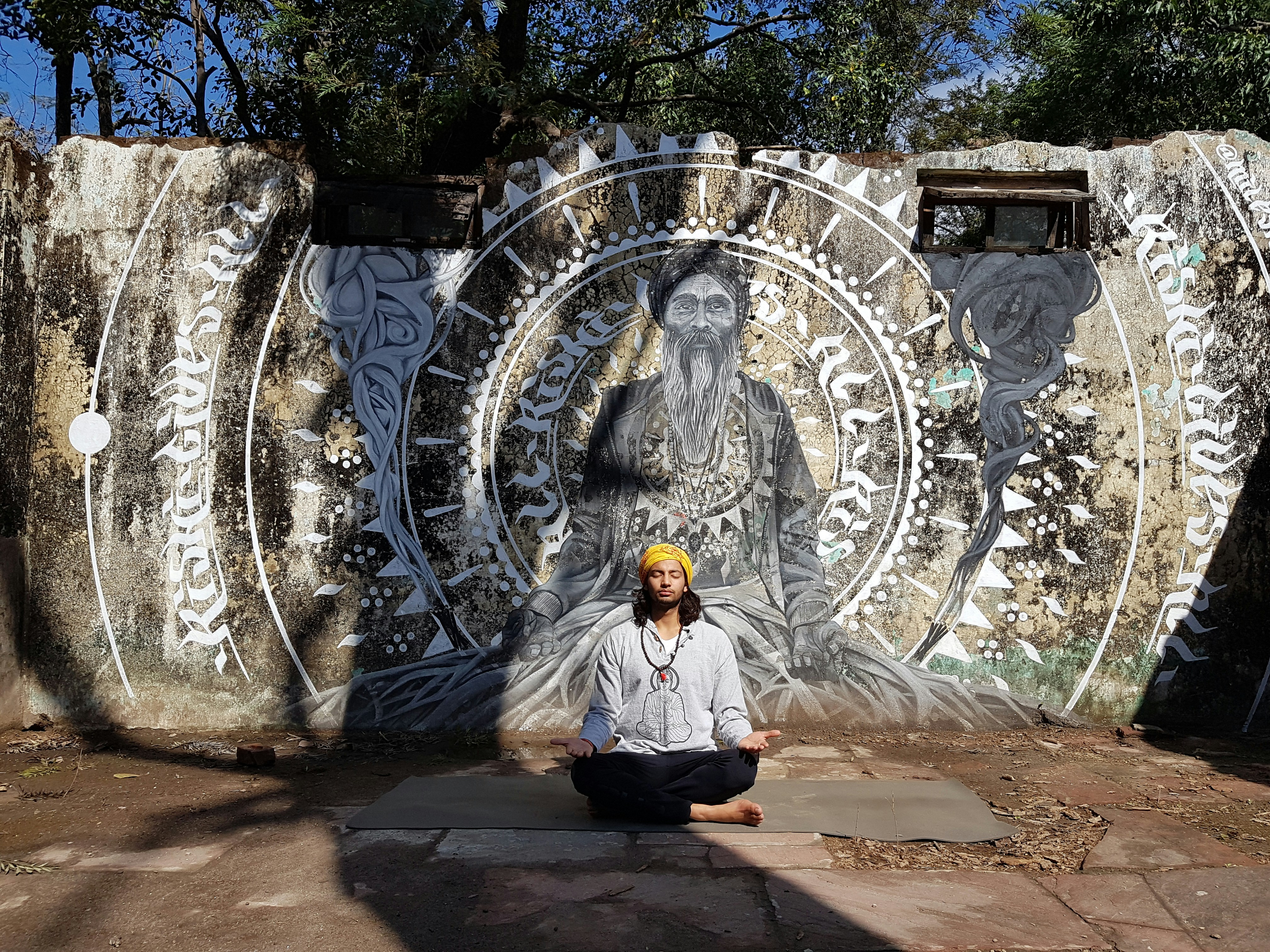
Meditation is the quieter twin of yoga here, and for many travellers the deeper reason to come.
Meditation is the quieter twin of yoga here, and for many travellers it is the deeper reason to come. Where a yoga class asks something of the body, a meditation sitting asks you to do almost nothing, which turns out to be harder and more rewarding. Rishikesh has taught stillness for far longer than it has taught postures.
You can find guided sittings in most ashrams, drop-in sessions in small centres, and longer silent courses for those who want to go further. If you have never meditated, start gently: a single guided sitting by the river, twenty minutes with someone counting the breath for you, is a fair first taste and easy to arrange. My suggestion is to pair one meditation sitting with one sound-healing session during your stay. They work on the same quiet part of you from different directions, and doing both, on separate days, tends to make each one clearer.
When is the best time to visit Rishikesh?

Rafting usually runs September to June and pauses during the high-flow monsoon months for safety.
The most comfortable months are roughly late September to April, when the days are clear and mild and the evenings by the river are cool. This window also covers the calmest version of the town.
Early to mid March brings the yoga festival and a lively, crowded energy. The monsoon months of July and August turn the hills green and dramatic but bring heavy rain, and white-water rafting usually pauses for safety during the high-flow period. High summer before the rains can be very warm. If your priority is the quiet Rishikesh of long river afternoons and unhurried ceremonies, aim for the autumn and winter shoulder, avoid the busiest festival weekends, and give yourself early mornings, which are the calmest hours of any day here.
How many days do you need in Rishikesh?
Two nights is the minimum to feel the place rather than just tick it. Three to four nights is the honest sweet spot, enough for a couple of yoga classes, a sound session, an aarti or two and a Himalayan walk, without rushing. A week suits anyone doing a course, a longer meditation practice or a proper reset.
The mistake I see most often is treating Rishikesh as a half-day stop between Delhi and the mountains. You can do that, and you will have seen a bridge and a temple. But the town works on you slowly. Its gifts, the rest, the quiet, the way the river reorganises your sense of time, arrive on day two and three, not in the first afternoon. Build in the extra night. Rishikesh is one of the few places where doing less is the whole point.
Practical things to know before you go
A little context makes Rishikesh easier, and the town is well used to international visitors:
- Food and drink: vegetarian and alcohol-free by custom across most of the town. The food is fresh and plentiful, and this is a gentle place to eat well and simply.
- Dress: modest clothing that covers shoulders and knees is respectful, especially around temples, ashrams and the ghats. Loose and light is also just practical.
- Getting there: fly to Dehradun (Jolly Grant), or take a train to Haridwar and transfer; the road from Delhi takes around six hours.
- Ashram stays: many ashrams welcome guests for simple stays with an early rhythm of practice, often ₹600 to ₹1,500 (about $6 to $16) a night with meals. They are not hotels, and that is the point. Read the house rules before you book.
- Health and safety: drink bottled or filtered water, mind the monkeys around the bridges, and check current conditions before any rafting or trekking. For medical or vaccination questions, speak to a travel clinic before you travel, and check your government's current travel advice.
- Respect the sacred: the river and its rituals are the heart of the town. Watch, follow, and ask before photographing people. You will find people generous when you approach with quiet.
If you would like a trip built around this quieter Rishikesh, timed for the calmest weeks and paced so the town has room to work on you, plan my India trip.
Frequently asked questions
Is Rishikesh worth visiting if I do not do yoga?
Yes. Yoga is the headline but not the whole story. The evening river ceremonies, the flute at dusk, sound healing, meditation, Himalayan walks and simple riverside rest make Rishikesh worthwhile even if you never step onto a mat.
What is the flute ceremony in Rishikesh?
There is no single formal flute ceremony, but the sound of the bansuri, the bamboo flute of Indian devotional music, is a regular part of dusk by the Ganges, often heard around the sunset Ganga aarti. A flute played over the river as the light fades is one of the town's quietest and most memorable experiences.
Do I need to be religious to attend the Ganga aarti?
No. The sunset aarti is open to everyone, and travellers of all backgrounds are welcome. Attend as a respectful guest: sit where locals sit, keep quiet, and ask before taking close photographs of people.
Is Rishikesh safe for solo and female travellers?
Rishikesh is generally considered one of the calmer, safer towns in India for travellers, including solo and female visitors, helped by its vegetarian, alcohol-free character. Use the same sensible precautions you would anywhere, favour well-reviewed stays, and avoid isolated riverbanks after dark. Check current local advice before you travel.
How many days should I spend in Rishikesh?
Three to four nights is the sweet spot. It gives you time for a couple of yoga classes, a sound-healing session, the evening aarti and a short Himalayan walk without rushing. Two nights is the minimum to feel the place at all.
What is the best time to visit Rishikesh?
Late September to April brings the most comfortable weather and the calmest atmosphere. Early–mid March adds the yoga festival and bigger crowds, while the July–August monsoon is green but wet, with rafting usually paused for safety.