The honest difference is not the oil or the room. It is whether a doctor looked at you first.
Here is the short version. Authentic Ayurveda in India is medicine that begins with a doctor examining you. A spa treatment begins with a menu. If you have researched Ayurveda in India at all, you have seen how far the word stretches: across resort spa menus, airport billboards, and the signboards of small clinics down quiet Kerala lanes. The version that heals and the version that simply relaxes look almost identical from the outside. This guide is how I tell them apart, from the part of India where the tradition is most alive.
There is nothing wrong with a good massage. But Ayurveda was never designed to be a pampering session. It is a system of medicine that is thousands of years old. Knowing the difference protects your time, your money and your health.
What is authentic Ayurveda in India, really?
Authentic Ayurveda is a complete system of traditional medicine. It diagnoses you as an individual, prescribes treatment for a reason, and is delivered under the supervision of a qualified Ayurvedic doctor. Relaxation may follow, but it is a side effect, not the goal.
The word translates roughly as the knowledge of life, and at its centre is a simple idea: each person has a particular constitution, and health is what happens when it stays in balance. Treatment is therefore personal. Two travellers can walk in with the same stiff shoulders and leave with different oils, diets and routines, because the practitioner treats the person, not only the symptom.
A real centre asks about your sleep, digestion and stress before anyone touches a bottle of oil. That difference, person-first versus menu-first, is the most reliable tell you have.
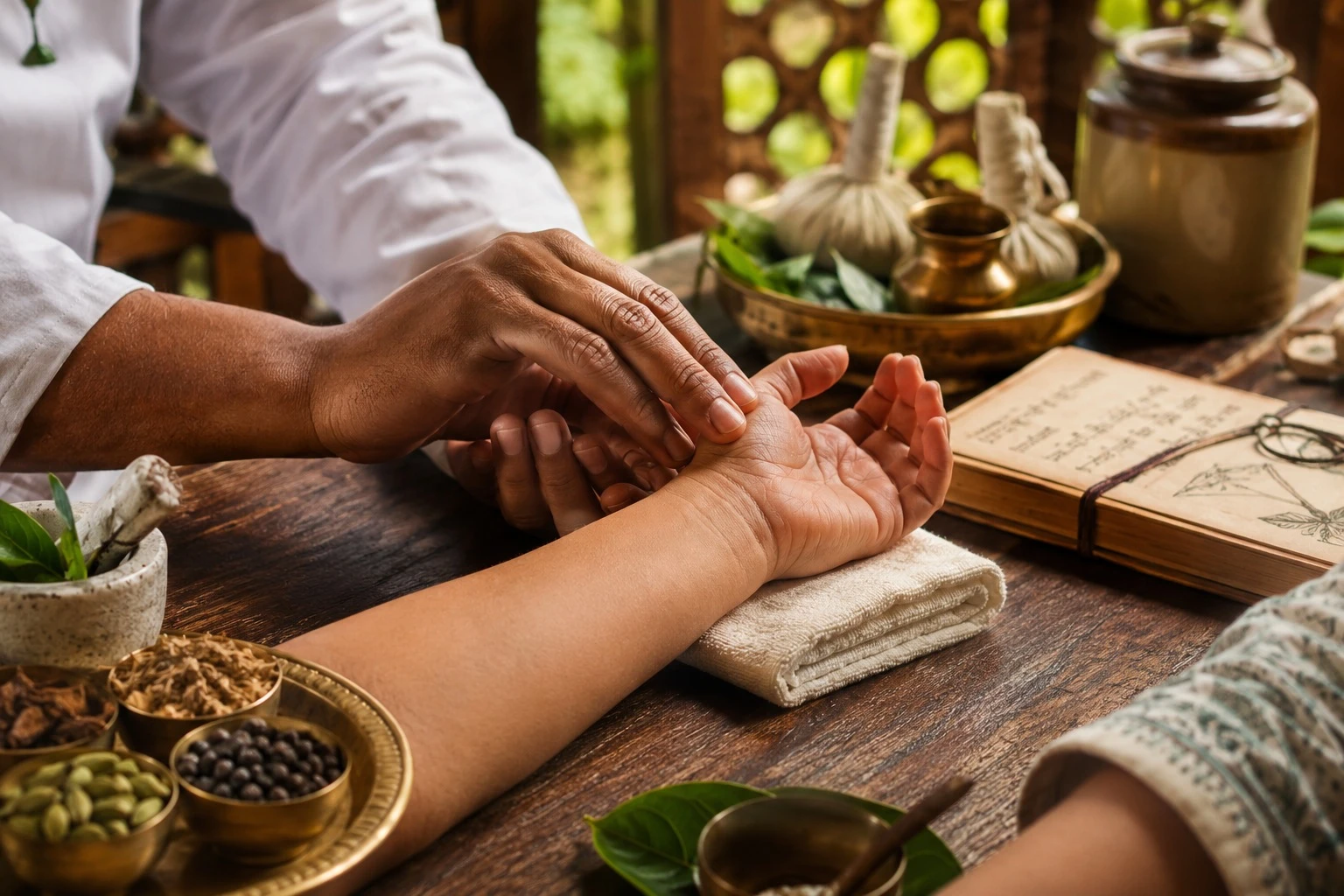
A genuine Ayurvedic consultation begins with the practitioner, not the treatment menu. The doctor assesses your constitution before prescribing anything.
Why did Kerala become the home of Ayurveda?
Kerala is widely regarded as the home of Ayurveda because physician families kept the tradition alive across generations, and because the climate suits the treatments themselves. It is not the only place Ayurveda is practised, but it is where the unbroken lineage runs deepest. If Kerala is already on your route, an Ayurvedic stay sits naturally alongside a night on the backwaters.
A few things came together. The state has a long line of vaidyas, hereditary physicians who passed knowledge down through families. The monsoon climate, with its cool, moist air, is considered ideal for the oil-based therapies at the heart of the practice, which is why the rainy months of roughly June to August are traditionally the best season for serious treatment, not the worst. Kerala also grows much of its own raw material, and the state formally classifies Ayurvedic centres.
That makes it the easiest place in India to find the real thing, and why so many of the most genuine Ayurvedic treatment options in Kerala sit not inside five-star resorts but in modest, doctor-run hospitals most tourists never think to look for.
Ayurvedic treatment vs a spa massage: the real difference
The techniques can look similar. The intent behind them is completely different.
| Authentic Ayurvedic treatment | Spa massage | |
|---|---|---|
| Starts with | A doctor's consultation | A treatment menu |
| Chosen by | Prescribed for your constitution | Picked by you for pleasure |
| Oils | Medicated, herbal, earthy | Generic, aromatic, perfumed |
| Goal | Restore balance / treat something | Relaxation |
| Format | A course over several days | A standalone hour |
| Aftercare | Diet, rest and routine advice | None |
If nobody asks about you and the oils smell mainly of lavender and citrus, you are in a spa, and that is fine, as long as you know which one you chose.
How can you tell a real Ayurvedic centre from a tourist spa?
The clearest signals are official classification, a doctor on site, medicated oils, and a treatment plan rather than a price list. In Kerala, the government runs a certification system that does much of the filtering for you.
The Kerala Tourism Department classifies Ayurvedic centres into two accredited tiers, designed precisely to help visitors avoid guesswork:
- Green Leaf. The higher classification. Stricter standards for facilities, hygiene and setting, including qualified physicians on site, trained therapists, quality furnishings, a herb garden and a calm environment. Granted for three years and renewable.
- Olive Leaf. The standard classification. Same core medical requirements, treatment under a qualified Ayurvedic physician and properly trained therapists, but simpler facilities.
Both tiers require that therapies happen only under a physician with a recognised degree in Ayurveda, and by therapists trained at government-recognised institutions. Seeing one of these certificates on the wall is the fastest way to confirm you are somewhere serious. Beyond the certificate, look for a few more things:
- A real consultation, you meet a doctor and answer questions before any treatment is booked
- Medicated, not perfumed, oils, authentic oils smell herbal and earthy, rarely like a perfume counter
- Simple treatment rooms, often a wooden droni, the carved treatment table
- Same-sex therapists, genuine centres assign accordingly, as standard practice
- A plan, not a one-off, real treatment usually comes as a course over several days, with advice for the time in between
Shirodhara, a thin, steady stream of warm oil poured across the forehead, is prescribed for the nervous system and sleep, not merely for relaxation.
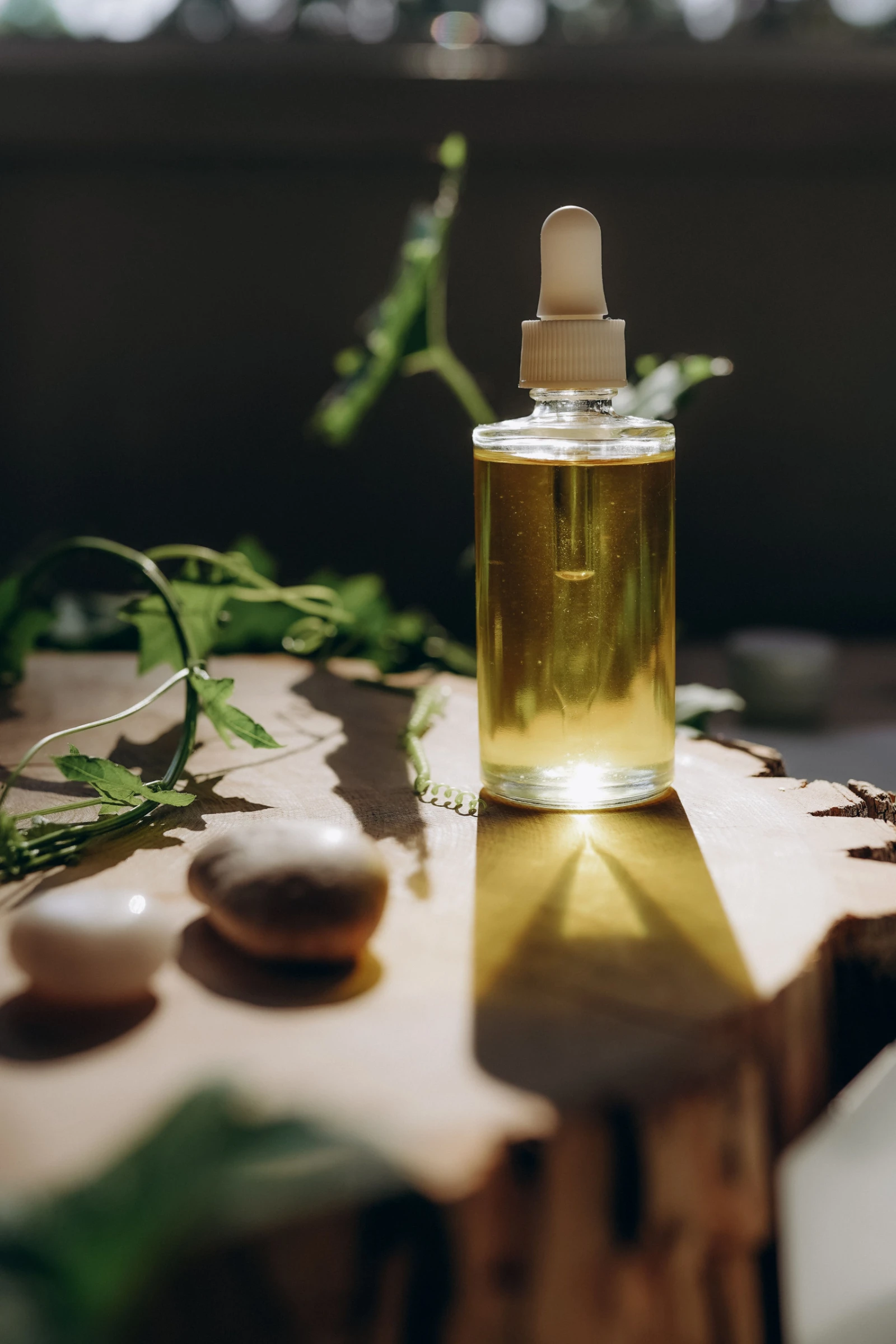
Medicated oils are prepared from herbs grown locally, they smell earthy and complex, nothing like a commercial spa product.
What happens in a genuine Ayurvedic consultation?
A genuine consultation is a diagnosis. The doctor assesses your constitution and current imbalance through observation, questions and pulse reading, then prescribes treatment, diet and routine. It takes longer than you expect, because it is medicine, not admin.
The framework most people have heard of is the doshas, the three functional energies known as vata, pitta and kapha. Everyone is born with a particular mix, and discomfort is read as an imbalance in it. The doctor works out your constitution and where you have drifted from it, often by checking your pulse and looking at your tongue, eyes and skin.
If a centre skips the consultation and goes straight to the oil, you are not receiving Ayurveda, you are receiving a massage with an Ayurvedic name.
What treatments will you actually receive?
The most common authentic therapies are abhyanga, shirodhara, and the deeper cleansing programme called panchakarma. Each is prescribed for a reason, and most are oil-based.
- Abhyanga. A full-body massage with warm medicated oil, often by two therapists in rhythm. Deeply relaxing, but also physiological work, moving oil into the tissues to loosen what Ayurveda calls accumulated toxins.
- Shirodhara. A thin, steady stream of warm oil poured across the forehead. It looks serene, but it is prescribed for the nervous system, for sleep and mental restlessness.
- Panchakarma. The deep-cleansing heart of Ayurveda: a structured programme of preparation, elimination and recovery over a week or more under close medical supervision. It can include herbal purgation and medicated enemas, which is exactly why it should never be a casual booking.
- Supporting therapies. Herbal steam baths, medicated rice-bolus massage, nasal treatments and prescribed herbal medicines, chosen to fit your diagnosis, not a menu.
None of these should be sold off a laminated menu. They should be prescribed.
Abhyanga uses warm medicated oil worked systematically into the body, the therapists move in rhythm, and the oils are chosen for your specific constitution.
How long does authentic Ayurveda really take?
A single session can relax you, but real results from a programme such as panchakarma typically need 7 to 21 days. Anything sold as a one-hour Ayurvedic cure is marketing, not medicine.
A standalone abhyanga or shirodhara is wonderful and you will feel it the same evening. But the treatments Ayurveda is known for, the ones that shift sleep, digestion or long-running stress, are courses, not appointments. A short reset might run seven days, a fuller panchakarma fourteen, and the classical version twenty-one days or more. Be sceptical of anywhere promising deep detoxification in an afternoon. For a shorter wellness thread, Rishikesh in the Himalayan foothills offers meditation and river ritual rather than clinical treatment.
What does authentic Ayurveda in Kerala cost?
Costs vary widely by setting rather than by quality. A doctor-run local hospital can deliver excellent treatment affordably, while a resort charges far more for comparable therapy in a more comfortable setting. A higher price does not guarantee more authentic care.
The shape of the market is stable. Traditional Ayurvedic hospitals and modest centres are often the most authentic option, where the focus is entirely on treatment and the surroundings are simple. Dedicated retreats and wellness resorts charge a premium for the room, the food and the all-inclusive rhythm, and a serious medical programme can still run alongside. Luxury resorts sit at the top, where Ayurveda is one offering among many. Rates also move with the season, which our month-by-month guide to visiting India sets out region by region.
The price tag tells you about the setting, not the medicine. Judge the centre by its doctor, its certification and its consultation, then choose the comfort you want around that.
Frequently asked questions
Is Ayurveda in India scientifically proven?
Ayurveda is a traditional system with thousands of years of practice behind it, and many people find real relief, particularly for stress, sleep and chronic discomfort. Modern clinical evidence varies by treatment. Treat it as complementary, keep your own doctor informed, and consult a professional before stopping or replacing any prescribed medication.
What is the best time of year for Ayurvedic treatment in Kerala?
Traditionally the monsoon months, roughly June to August, because the cool, humid air is thought to help the body absorb the medicated oils. Treatment continues year round, so the right time is whenever you can give it enough unhurried days.
Is authentic Ayurveda relaxing or is it intense?
It can be both. A single oil massage is relaxing. A full programme such as panchakarma is therapeutic and can be demanding, with dietary restrictions and cleansing therapies. Knowing which you are signing up for helps you arrive with the right expectations.
Do I need to follow a special diet during treatment?
Usually yes. Diet is considered part of the medicine, so a serious centre will adjust your food to support the treatment, often lighter, warm and simple. Following it closely is part of why the programme works.
Can I combine an Ayurveda programme with the rest of an India trip?
Yes, and many travellers do, though it is best placed at the start or end so the rest can settle around it. A few days of treatment pair naturally with Kerala's backwaters and hills.