Last updated: 5 November 2026
Quick Answer: Choose North Goa for nightlife, flea markets and a busy beach scene; choose South Goa for quieter sand, wider beaches and a slower pace. Neither side wins outright; it comes down to whether you want crowds and clubs or space and calm. Fly into Mopa for a northern base and Dabolim for a southern one.
Deciding between North Goa or South Goa is the first real choice of any Goa holiday. It shapes where you sleep, what you do after dark and how much of the state you spend sitting in a car. Here is how the two sides actually differ, beach by beach, with the season and safety rules from official sources.
| North Goa | South Goa | |
|---|---|---|
| Beaches | Long, busy strands: Baga, Calangute, Anjuna, Vagator, Morjim | Quieter, wider sand: Colva, Benaulim, Agonda, Palolem |
| Vibe | Markets, beach shacks, clubs and crowds | Villages, palm groves and space |
| Things to do | Nightlife, Saturday markets, forts, water sports | Slow beach days, dolphin trips, spice farms, old churches nearby |
| Getting there | Manohar International Airport at Mopa, in the north | Dabolim (GOI) airport, near Vasco in the south |
| Suits | First-timers who want atmosphere and options | First-timers who want rest, families and couples seeking quiet |
What kind of holiday do you actually want?
The honest answer is that the north and the south are two different products sharing one coastline. The north is where Goa's famous energy sits: beach shacks playing music, night markets, clubs, and a dense strip of towns you can hop between. The south trades that energy for room to breathe, with wider sand, fewer people and resorts built around doing very little.
Most of the classic things to do in North Goa, from Saturday markets to club nights, sit within a short ride of each other. The things to do in South Goa are spread out and slower: a long beach walk, a dolphin trip, an afternoon at a spice farm. A first trip goes right when you match the side to the holiday you actually want, not the one a photo showed you.
Travelling with friends, or after a party scene? That is the clearest case for the north. Its clubs, late shacks and night markets cluster close together, so a group can move between them without a long drive home, while the south's quieter beaches suit friends who want long lunches more than late nights.
Which are the best beaches in Goa on each side?
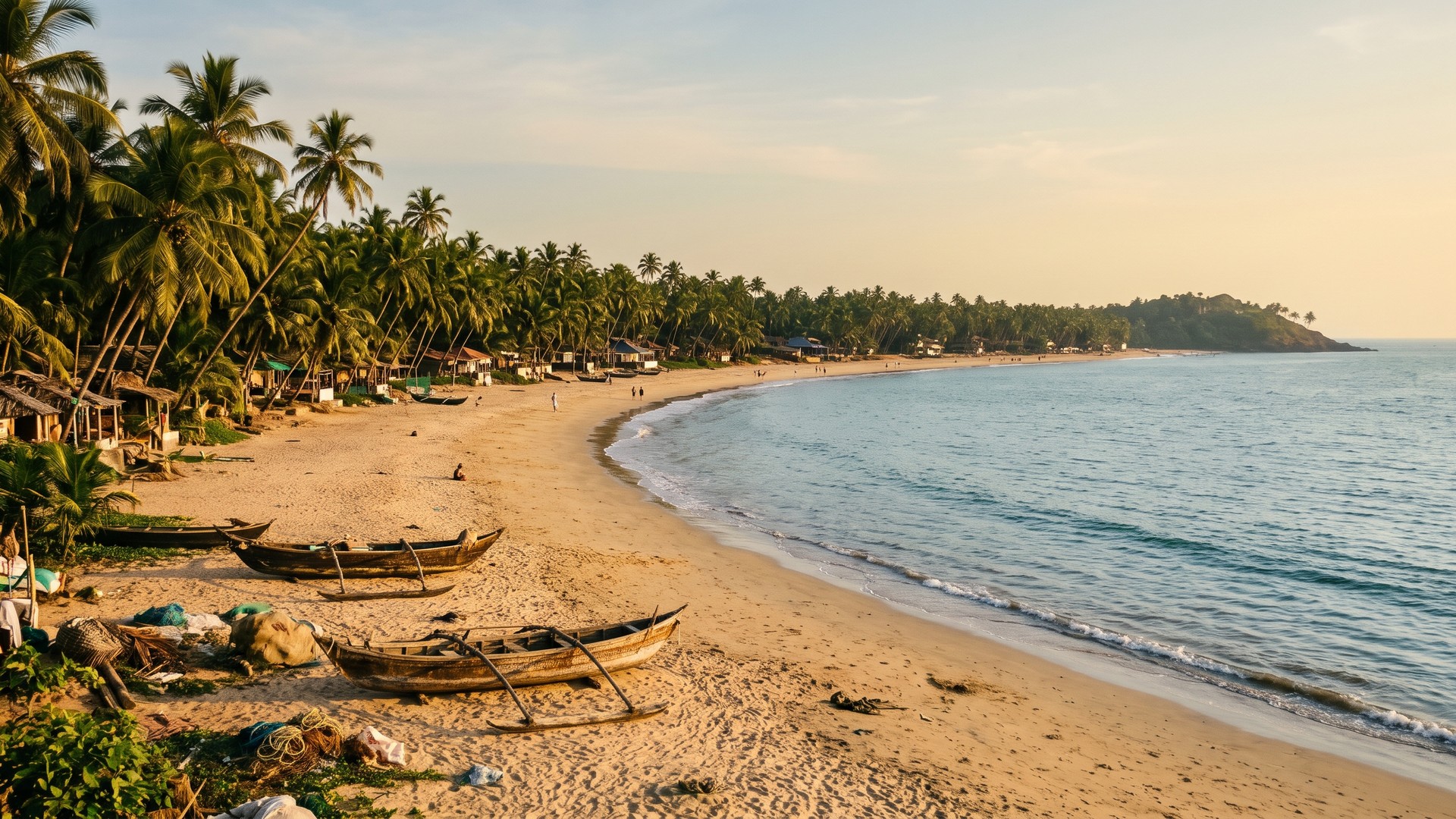
Beach by beach, the best beaches in Goa sort themselves clearly by side. In the north, Baga and Calangute are the strands most set up for visitors, lined with shacks and water sports. Anjuna and Vagator sit under cliffs with a more mixed, party-adjacent scene, and Morjim, in the far north, is quieter with a long stretch of flat sand.
In the south, Colva and Benaulim are the classic family beaches close to Margao. Agonda and Palolem, further down the coast, are the ones people mean when they describe South Goa as calm, with Palolem a wide bay you can walk at sunset. No single beach suits everyone; each is a trade between atmosphere and elbow room, and the trade shifts with the season.
If you are weighing Goa against India's other coast, our guide to the best beaches in Kerala compares Varkala, Kovalam and Marari in the same way.
Which is better, North Goa or South Goa, for couples?
Couples split by what they want from the week together. The north suits couples who want evenings out: beach shacks that turn into parties, night markets to wander, and restaurants within a short ride of each other. The south suits couples who want privacy and long unhurried days, and Agonda and Palolem in particular are built around quiet, with a handful of shacks rather than a strip.
Which is better for a family trip?
For families, the south usually makes the first trip easier. The beaches are wider, the towns quieter, and the classic family strands, Colva and Benaulim, sit close to Margao, South Goa's main town, with the airport at Dabolim a short drive away. The north works for families too, especially around Morjim, but the party belt around Baga gets loud and crowded in peak weeks.
Wherever you stay, the Department of Tourism's guidance is blunt. Keep children in your vicinity on the sand, swim only between the flagged zones, and do not swim after sunset; the beaches are closed from sunset to 7am.
Which airport should you fly into?
Goa now has two airports, and which one you land at decides a lot. Manohar International Airport at Mopa serves the north; the Prime Minister inaugurated it on 11 December 2022, according to the Press Information Bureau.
Dabolim (GOI), near Vasco, is the older airport and the natural gateway to the south. It operates as a civil enclave inside a military airbase, INS Hansa.
Check which airport your flight uses before you book a hotel. A Mopa arrival paired with a Palolem stay means a long transfer at both ends of the holiday, and long taxi rides add to the cost of the trip. Ask your hotel or driver what a fair taxi price is for your route, and agree it before you set off; tolls, ferry charges and parking are usually extra. For day-to-day spending, our guide to how much cash to take to India covers cards, cash and exchange.
When is it safe to swim, and in which season?
Plan your swimming for the dry season. According to the India Meteorological Department, the monsoon sets in over Kerala around 1 June and normally covers all India around 8 July.
The Department of Tourism's rules apply year-round. Lifeguards watch the swim zones marked by dual red and yellow flags, and a red flag means the water is off limits. Beaches are open from 7am to sunset, and swimming stops at sunset. The guidance warns against entering the sea after drinking any alcohol.
Rip currents are the specific danger the department names, so talk to the lifeguard on duty before you get in.
What are the common mistakes on a first Goa trip?
Most first-trip disappointments come from a handful of avoidable errors, and the same ones come up whichever side you pick:
- Swimming outside the flagged zones. The red and yellow flags mark where lifeguards watch; a red flag means stay out of the water entirely.
- Booking a hotel before checking the airport. A Mopa flight plus a South Goa hotel, or a Dabolim flight plus a North Goa one, adds hours of transfers.
- Judging a beach by one photo. The same beach is a different place in December and in June; the season changes the crowd, the surf and what is open.
- Planning every day. Goa rewards at least one unscheduled day, and a rigid list of sights turns a beach holiday into a commute.
- Assuming the whole state is one strip. The north and south are far enough apart that "popping over" for the afternoon is not a thing; pick a base or split the stay deliberately.
- Leaving transport to chance. Settle taxi prices before you set off, and expect tolls and parking to be extra.
How do you choose where to stay in Goa once you have picked a side?
Once you know north or south, deciding where to stay in Goa gets simpler: pick a base town close to the two or three beaches you will actually sit on, and the airport and the number of nights follow from there.
If you would rather hand that planning over, The Unbored Club, an India-based travel company that designs private, tailor-made India trips, can build Goa into a wider India itinerary around what you want from the coast. Many overseas operators sell Goa trips that a company in India runs for them; planning with a team inside the country means fewer intermediaries, so the budget stretches further on the coast itself, and local experiences that never reach a brochure come within reach.
Its Goa planning page is the place to start. A self-planned trip suits you if you enjoy the logistics yourself and want to book each stay directly; a UK high-street operator suits you if you want one contract in pounds for the whole holiday.
For timing, the month-by-month advice in the best time to visit India guide pairs Goa with the rest of your route, and the first-timer's planning roadmap covers visas, budget and getting around.
Pack for the coast with the India packing guide. Before you book, read the FCDO's India travel advice, current at 5 November 2026, and make sure your insurance covers the itinerary. If a private, tailor-made Goa holiday sounds right, plan a private Goa trip.
A few quick questions so we can design something truly personal for you.
