TL;DR
- This guide suits first-time visitors deciding between a summer trip and a quieter shoulder season. The real choices are how you arrive, by road or by air, and how many days you give the climb, since the first two days in Leh are for rest. Pick your month from the season table, plan at least a week, keep road legs flexible, and leave Hanle for later in the route.
Last updated: November 2, 2026
Quick Answer: The best time to visit Leh Ladakh on a first trip is May to September, Ladakh Tourism's summer season for lakes, treks and monastery festivals. Leh sits at about 11,500 feet (3,500 m), and the Ladakh Tourism advisory requires 48 hours of rest there first; The Unbored Club builds acclimatization days into its private Ladakh routes.
The best time to visit Ladakh, India's high-altitude desert in the far north, is decided less by the thermometer than by two things: how you reach it, and how your body handles the altitude once you land. Ladakh Tourism divides the year into four seasons, and each suits a different kind of trip.
| Season (Ladakh Tourism) | What the official site lists | How it suits a first trip |
|---|---|---|
| Spring (March to April) | Apricot blossoms, snow-melt trails, scenic photography | Possible, but cold, with a narrower choice of routes |
| Summer (May to September) | Lake excursions, trekking and biking, monastery festivals | The easiest first trip |
| Autumn (September to October) | Golden landscapes, clear skies, photography | Quieter, with cold nights |
| Winter (November to February) | Snow landscapes, Chadar Trek, Losar festival | Specialist trips only |
How do the roads into Ladakh work?
Ladakh has only two major road connections with the rest of India, according to the chief engineer of the Border Roads Organisation's Project Vijayak, quoted by All India Radio: the Srinagar-Kargil-Leh axis over the Zojila pass, and the Manali-Leh route. When each opens depends on snow clearance, which varies year to year, so treat any fixed opening date you read online with care. The Srinagar road runs through the Union Territory of Jammu and Kashmir, so read the State Department's India travel advisory on that territory before choosing it; flying into Leh avoids that road.
The picture is also changing. All India Radio reported on March 9, 2026 that Zojila stayed open through the 2025-26 winter and closed for only four days, where a decade ago the passes were shut for nearly five months. On the Manali side, the Atal Tunnel, opened in October 2020, now carries the road under the Rohtang Pass and cuts the Manali-Leh distance by about 29 miles (46 km), according to the Press Information Bureau. One good winter is not a promise, though, so a first trip is still best planned for the summer season.
Flying into Leh skips the passes altogether, but it lands you at about 11,500 feet (3,500 m) with no gradual climb, which is why the acclimatization rule below matters most for travelers who fly. Before any road day, check the IMD Met Centre Leh forecast, the official weather source for the region.
Which months give you the best time to visit Ladakh?
For most first-time visitors, the summer season from May to September is the time to go, and Ladakh Tourism ties it to lake excursions, trekking and biking, and monastery festivals. Its autumn season, September to October, adds golden landscapes and clear skies for travelers who want quieter roads.
Leh never gets hot. WeatherSpark's climate averages put the average high at 56°F (13°C) in May, 66°F (19°C) in June and 74°F (23°C) in July, the warmest month, when nights still fall to around 47°F (8°C). July also has the most wet days of the year in Leh, so the warmest weeks are not the driest ones.
Within the summer window, your choice comes down to what you want. May and June bring cooler days and fewer wet days. July and August bring the warmest weather, with July also the month with the most wet days. September keeps summer access with crisper air, at the cost of colder nights.
How does altitude shape your first week in Ladakh?
Altitude, not weather, is the thing most likely to reshape a first itinerary. Because of Leh's altitude, the Ladakh Tourism advisory requires all tourists arriving in Leh to undergo at least 48 hours of complete rest before traveling to higher-altitude areas. Day one is complete rest with no sightseeing. Day two is short, easy walks around Leh town only.
Travelers ascending rapidly above about 11,500 feet (3,500 m) are at risk of High-Altitude Pulmonary Edema (HAPE), the same advisory warns, and it recommends gaining no more than about 1,000 to 1,650 feet (300 to 500 m) of altitude per day above about 9,800 feet (3,000 m), with a rest day for every 3,300 feet (1,000 m) gained. It lists preventive medicine to be taken as recommended by your physician. It also advises avoiding alcohol altogether, no smoking in the first 48 hours, no strenuous activity on the first two days, and no sleeping pills or sedatives at altitude. Acute Mountain Sickness typically begins above about 8,200 feet (2,500 m), so a good route builds Leh, then Nubra or Pangong, then anything higher, in that order.
What should you do about health before you fly?
About a month before departure, talk to a travel clinic or your own doctor, using the CDC's India health guidance for travelers as your reference, and raise the altitude in that same conversation. If symptoms like a worsening headache, breathlessness at rest or confusion appear at altitude, the advisory is blunt: consult a doctor immediately, and descend if symptoms are severe.
Where does Hanle fit in a first Ladakh trip?
Hanle, a village on the Changthang plateau, hosts the Indian Astronomical Observatory, and the area around it was declared the Hanle Dark Sky Reserve in December 2022, the first dark sky reserve in India, according to the Indian Institute of Astrophysics. Hanle's altitude makes it a late stop on any route, not a day trip from Leh. Our guide to stargazing in Hanle covers the season, route, permits and homestays in detail.
What can you do in Ladakh in each season?
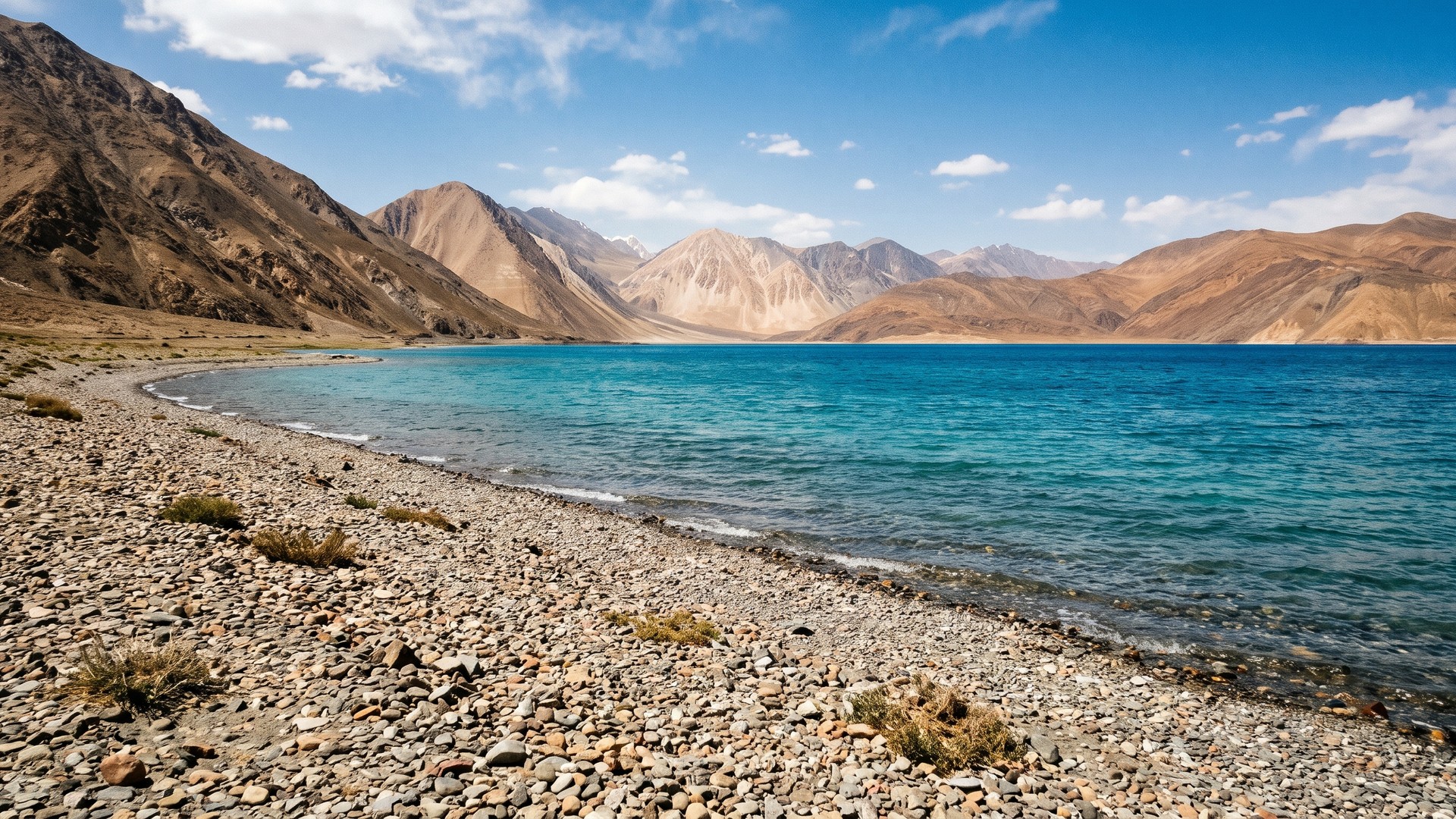
Things to do in Ladakh shift with the seasons, and a first trip usually mixes several of them. Summer is when Ladakh Tourism lists lake excursions, so it is the season for Pangong Tso and Tso Moriri, and for walking the monasteries of Thiksey, Shey, Likir and Hemis. Treks such as Markha Valley and Spituk to Stok fit the same months, and our piece on trekking in the Himalayas explains which routes suit a first-timer.
Ladakh Tourism's events calendar adds dated reasons to go: the Apricot Blossom Festival in spring and Ladakh Astro Week, a stargazing and astronomy week in May, with the masked Cham dances of the monastic festivals spread across the year. Winter belongs to snow landscapes, the Chadar Trek across the frozen Zanskar river and the Losar festival, all specialist trips rather than a first visit.
How does a Ladakh trip fit a US summer vacation?
For American travelers, Ladakh's summer season lines up neatly with the long US summer break, and June to August covers the school vacation. If your dates are flexible, May or September give you the same season outside the school vacation.
On paperwork, an India e-Tourist Visa is open to US citizens, and the official e-Visa portal says applications can be made at least 4 days in advance of arrival. The portal also states that the e-Visa does not cover Protected or Restricted Areas; those need their own permission. In Ladakh that matters, because places like Pangong, Nubra, Khardung La and Tso Moriri are protected or restricted areas, and permits are issued through the official LAHDC Leh permit portal, and the Ministry of Home Affairs FAQ there says a Protected Area Permit is valid only for groups of two or more; a solo traveler needs prior clearance, so check before you book.
If Ladakh is one part of a longer India trip, build the rest of the route around its summer window. Our month-by-month India weather guide helps you match each region to the right month.
Which timing mistakes do first-time Ladakh visitors make?
- Flying in and driving out the next morning. The 48-hour rest in Leh exists because HAPE risk is real above about 11,500 feet (3,500 m); treat the first two days as part of the trip, not a delay.
- Fixing a road date months ahead. Pass openings depend on snow clearance each year, so keep road legs flexible and confirm conditions close to departure.
- Cramming Pangong and Hanle into one week. Both sit far higher than Leh, and the advisory's 1,000-to-1,650-foot (300 to 500 m) daily gain guidance above about 9,800 feet (3,000 m) argues for a slower build.
- Ignoring July's rain. July is the warmest month in Leh but also the one with the most wet days, so keep a buffer day on road legs.
- Assuming September is too late. Ladakh Tourism counts September in both its summer and autumn seasons; only the cold of late autumn and winter changes the kind of trip.
- Treating a doctor's visit as optional. Book it about a month before departure, and put altitude on the list of things to discuss.
How does a private Ladakh trip come together?
Once you have a month, the rest of a private trip falls into sequence: a flight into Leh or a road approach, the acclimatization days in town, then a route that climbs gradually through Nubra or Pangong before anything as high as Hanle. The Unbored Club, an India-based travel company that designs private, tailor-made India trips, plans Ladakh routes this way, with acclimatization built in from the first conversation. With the team in India rather than overseas, a weather delay or a closed pass can be worked around from within the country, with no middle layer to go through. You can see how its private India trips work before you inquire.
If you would like a first Ladakh route shaped around your dates, start a conversation here. The team will give you an honest view of whether your dates suit Ladakh.
A few quick questions so we can design something truly personal for you.
