Last updated: 30 October 2026
Quick Answer: The best time to visit Kerala is December to February, the months Kerala Tourism describes as usually pleasant and cool. October and November bring the lighter northeast monsoon, and the heavier southwest monsoon normally sets in around 1 June. The Unbored Club, an India-based travel company that designs private, tailor-made India trips, can match your dates to the season.
Kerala sits on India's southwestern coast, and the best time to visit Kerala depends less on heat than on rain. The state has a tropical climate with two rainy seasons, according to Kerala Tourism's climate guide. The southwest monsoon of June and July brings the major share of the year's rainfall. The northeast monsoon follows in October and November. Between them and around them sit the months most travellers want.
Here is the year at a glance:
| Period | Weather | What it suits |
|---|---|---|
| December to February | Usually pleasant and cool | First trips, backwaters, hill stations, festivals |
| March to May | High humidity; sultry on the coast and midlands | Quieter travel; the cooler high ranges |
| June to July | Southwest monsoon; the major share of rainfall | Green, quiet travel with flexible plans |
| Karkidakam (roughly July to August) | A Malayalam month inside the monsoon season | Ayurveda rejuvenation programmes |
| August to September | The rest of the IMD's June-to-September monsoon season | Onam; quiet, green travel with flexible plans |
| October to November | Northeast monsoon: the smaller share of rain | Green landscapes; travellers who don't mind showers |
When is Kerala's weather at its best?
December to February is the most reliable window. Kerala Tourism notes that while there is no marked cool season in the state, December, January and February are "usually pleasant and cool". Coastal and midland temperatures range from 25 to 36 degrees Celsius across the year, so even in these months Kerala is warm by UK standards. The difference is lower rainfall and more comfortable evenings.
Within that window, your choice of exact weeks is a matter of preference rather than weather. If your plans depend on dry days, such as time on the water or long drives between regions, any of these three months can work. The northeast monsoon months of October and November have passed by December, and the southwest monsoon does not normally arrive until around 1 June. You will often see October to March quoted as Kerala's season, and Kerala Tourism's own travel tips call November to February the peak season; October and November are greener and wetter, and December to February is the drier core.
What is the best time to visit Kerala for a first trip?
If you want the best month to visit Kerala on a first trip, choose January or February. Both sit inside the usually pleasant, cool months Kerala Tourism describes, and the southwest monsoon is months away. February also carries one of the state's best-known festivals: Attukal Pongala, at the Attukal Bhagavathi Temple in Thiruvananthapuram, is listed by the Kerala Tourism festival calendar for 22 February 2027.
Treat that date, and every festival date, as provisional. Kerala Tourism's own calendar warns that festival dates are decided by the Malayalam calendar and local customs, that they can change, and that they "have to be confirmed with the local authorities". Build a trip around a festival only after confirming the date locally.
What is the best month to visit Kerala, month by month?
The table below draws on Kerala Tourism's climate guide, the India Meteorological Department's monsoon dates and the IMD's 1971 to 2020 rainfall averages for Kerala. Festival dates come from Kerala Tourism's 2026-27 event calendar.
| Month | Weather | Good for |
|---|---|---|
| January | Usually pleasant and cool; outside both monsoons | Backwaters, hills, the Kerala Literature Festival in Kozhikode (21 to 24 January 2027) |
| February | Usually pleasant and cool | Attukal Pongala (22 February 2027) |
| March | Humidity rising on the coast and midlands | The high ranges; Chettikulangara Bharani in Alappuzha (March 2027) |
| April | High humidity; sultry on the coast | The hills; Thrissur Pooram, held in the Malayalam month of Medam (April to May) |
| May | High humidity; sultry on the coast | The cooler high ranges |
| June | The southwest monsoon's normal onset is 1 June | Monsoon travel with spare days |
| July | Southwest monsoon; with June, the major share of the year's rain | Karkidakam and Ayurveda |
| August | Inside the IMD's June-to-September monsoon season | The Nehru Trophy Boat Race (usually August; 22 August in 2026); Onam (August to September) |
| September | The last month of the IMD's southwest monsoon season | Quiet travel; Onam in some years |
| October | Northeast monsoon at its wettest in Kerala; about 310 mm of rain on average | Green landscapes, if you don't mind showers |
| November | Northeast monsoon easing; about 150 mm on average | Shoulder travel as the rain eases |
| December | Rain falls sharply to about 30 mm on average | The start of the main season |
Kerala Tourism's 2026-27 calendar runs to March 2027, so it gives no 2027 dates for Onam, the Nehru Trophy Boat Race or Thrissur Pooram. Plan around their usual months and confirm the dates locally.
What is Kerala like during the monsoon?
The monsoon is not one season but two. The India Meteorological Department says the southwest monsoon "normally sets in over Kerala around 1st June" and then advances northwards over the country. Kerala Tourism describes this as the rainy season that brings the major share of the state's rainfall, in June and July. The second, the northeast monsoon, brings the smaller share of rain in October and November.
Monsoon travel is a real option, not a consolation prize, if you know what you are signing up for. Rain is the point of these months: rivers fill, the countryside is at its wettest, and the rhythm of the day changes around the showers. Houseboat trips and beach time are weather-dependent, and you should build flexibility into any monsoon itinerary. If you would rather not plan around rain at all, stay inside the December-to-February window.
Why does the monsoon suit Ayurveda?
Kerala's Ayurveda tradition ties its treatment season to the monsoon. Kerala Tourism's article on Ayurvedic rejuvenation programmes says the Malayalam month of Karkidakam, roughly July to August, "has been deemed as the best time to indulge in rejuvenation therapies", especially Panchakarma. The same article describes the monsoon as starting by June and lasting about two months.
That is a traditional view, not a medical one. Ayurveda is a wellness tradition, not a cure, and no treatment outcome is guaranteed. If you have a health condition or take medication, speak to your doctor or a travel clinic before booking a treatment programme of any length.
How do the hills and the coast differ by season?
Kerala is not one climate even within its own borders. Kerala Tourism's climate guide notes that the high ranges in the eastern part of the state, marked by the mountains of the Western Ghats, experience low temperatures. The coastal regions and midlands, by contrast, sit in the 25 to 36 degree Celsius band. From March to May, high humidity and sultry conditions prevail on the coast and in the midlands. That makes the hills the more comfortable place to be in spring.
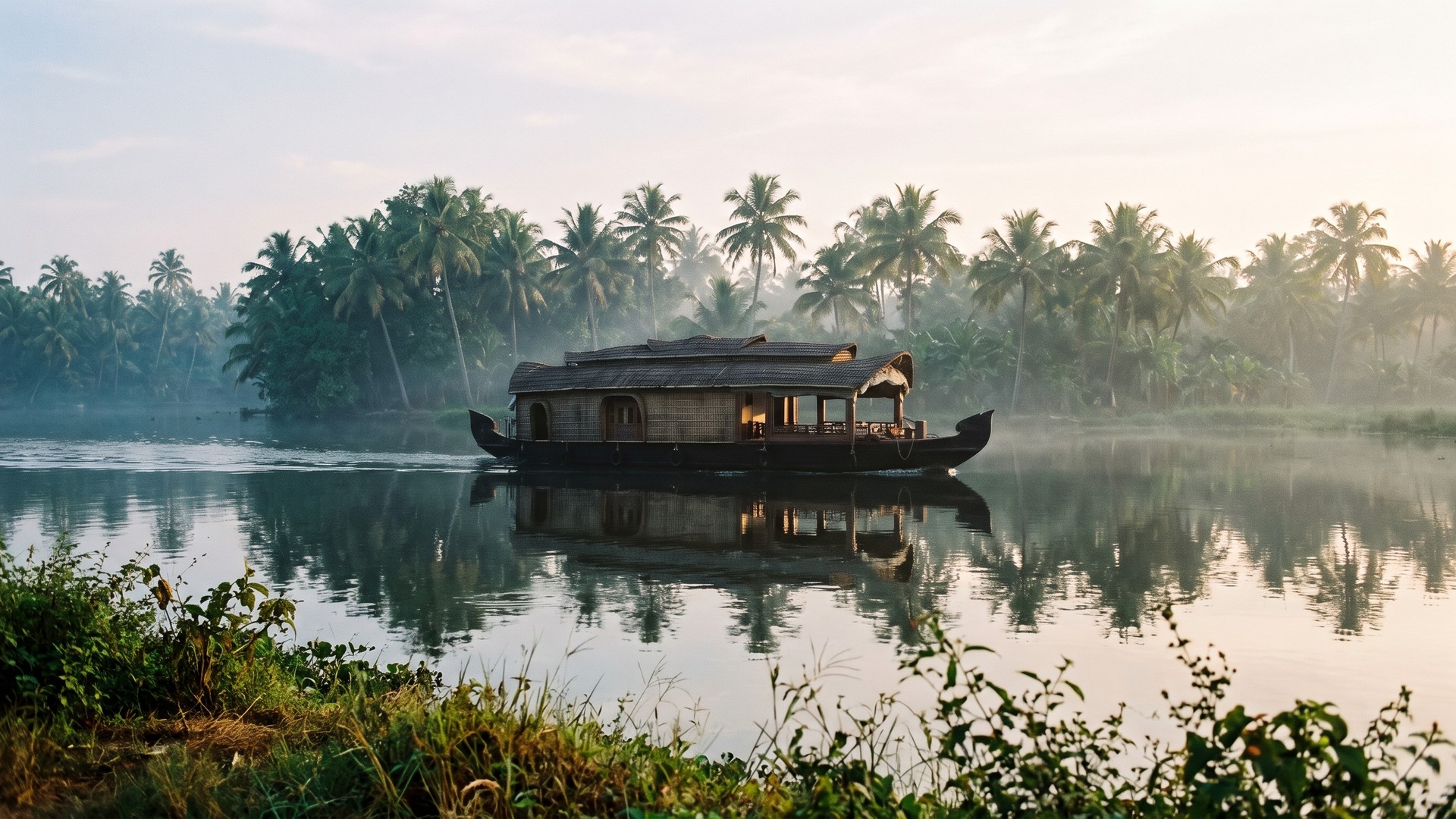
The December-to-February window comes after the main northeast monsoon rains of October and November (the IMD counts December in that season, but it averages only about 30 mm) and long before the southwest monsoon, which is why it suits the coast and the backwaters. If a night aboard a rice barge is the heart of your trip, our Kerala backwaters houseboat guide covers what to expect and how to book it.
What are the common mistakes in timing a Kerala trip?
- Assuming all rain is equal. The southwest monsoon of June and July brings the major share of Kerala's rainfall; the northeast monsoon of October and November brings the smaller share. They are not the same season.
- Expecting a cool season. Kerala Tourism is blunt that there is no marked cool season here, only the usually pleasant months of December, January and February. Pack for warmth on the coast, not winter.
- Packing for the tropics only. The Western Ghats high ranges experience low temperatures, so a warm layer is worth carrying if the hills are on your route.
- Treating festival dates as fixed. Dates follow the Malayalam calendar and, in Kerala Tourism's words, "have to be confirmed with the local authorities".
- Leaving the visa too late. The e-Tourist Visa can be applied for a minimum of four days before arrival, but leaving it that tight leaves no room for corrections.
- Forgetting the e-arrival card. Foreign nationals must complete India's online e-arrival card, which opens 72 hours before arrival, or risk delays at immigration.
When does another season suit you better?
If your priority is Ayurveda rather than sightseeing, the monsoon months may suit you better than the dry season. The tradition deems Karkidakam, roughly July to August, the best time for rejuvenation therapies. If you want the hills and tea country, Kerala Tourism names November to February as the pleasant months in hill stations such as Munnar and Thekkady; in the humid March-to-May spring, the high ranges are simply more comfortable than the coast. And if Kerala is one stop on a wider India trip, the timing question changes shape entirely; our best time to visit India guide covers the whole country, month by month. Price follows the weather too: our India trip cost guide notes that the monsoon months, broadly June to September, are the cheapest time to travel, particularly in Kerala.
What should UK travellers sort out before booking dates?
Check the FCDO's India travel advice before you commit to dates. On 30 October 2026 the FCDO advised against all travel to parts of India, none of them in Kerala; check the advice again when you book. You must have a visa to visit India unless you hold an Overseas Citizen of India card. Your passport must be valid for at least 6 months after you arrive and have at least 2 blank pages.
The Indian government's e-Visa portal offers an e-Tourist Visa in 30-day, one-year and five-year forms, and you can apply a minimum of four days before arrival. The portal says travellers of Pakistani origin, or with a Pakistani passport, cannot use the e-Visa and should apply for a regular visa at an Indian mission. For British citizens, its e-Tourist Visa fee table lists US$25 (about £19) for a 30-day visa (US$10, about £7.50, from April to June), US$40 (about £30) for a one-year visa and US$484 (about £361) for a five-year visa, at the European Central Bank's 30 October 2026 rate. A 3% bank charge is added, so check the table on the day you apply. The e-Visa is not valid for visiting protected, restricted or cantonment areas. Before you fly, India also requires foreign nationals to fill in an online e-arrival card, which opens 72 hours before arrival. It is not a visa, and you still need a separate valid visa or OCI card to enter.
School holidays shape many UK family trips. The Christmas holidays and February half term fall inside the December-to-February window, while Easter lands in the humid March-to-May stretch. Term dates vary across the UK, so check your local council's dates. If your flight from a UK airport to Cochin International Airport at Kochi connects through the Gulf, read the FCDO's India page before you book. On 30 October 2026 it warned that escalation in the Middle East had caused airspace closures and delayed and cancelled flights.
How do you turn your chosen month into a Kerala route?
Once you have a month in mind, the next step is turning it into a route. A typical first trip loops from Kochi through the hills, the backwaters and the coast, and our ten-day Kerala itinerary shows how those pieces fit together. The Unbored Club plans Kerala journeys around your dates and interests. Planning with a team based in India also means fewer intermediaries and someone in the country if the monsoon shifts your plans. You can start that conversation at the Kerala trip planning page.
If you would rather talk it through with a person before deciding, tell us what you have in mind and we will help you match the month to the trip.
A few quick questions so we can design something truly personal for you.
