TL;DR
- This guide is for American travelers who want to feel at ease in temples, homes and markets without a rulebook. Most situations come down to a few habits: greeting, covering up, shoes, the right hand and asking before photos. The decisions that matter are what to wear at stricter temples and how to accept hospitality gracefully. Read the temple and meal sections before your first visit.
Last updated: November 2, 2026
Quick Answer: The cultural customs in India that matter most are namaste, modest dress, shoes off at temples and homes, and eating with your right hand. Cover your knees and shoulders, ask before photographing people, and keep affection private. Small adjustments, not a new rulebook, cover almost every situation an American traveler meets.
India rewards travelers who arrive knowing a few basics. The customs and etiquette that fill guidebooks boil down to a handful of daily habits, from the moment you meet your driver to the moment you step into a temple courtyard. None of them asks you to change who you are; they ask you to notice how your hosts read gestures, clothing and space.
Here is the short version of what to do, and where each custom comes up:
| Custom | What to do | Where it comes up |
|---|---|---|
| Greeting | Press your palms together and say namaste, with a slight bow | Meeting hosts, guides, elders |
| Dress | Cover knees and shoulders; skip shorts and tank tops | Everywhere, especially temples |
| Shoes | Remove them before entering temples and homes | Temples, homes, some shops |
| Hands | Give, receive and eat with your right hand | Meals, markets, receiving prasad |
| Feet | Never point them at people or altars; do not step over anyone | Temples, floor seating |
| Photography | Ask before photographing people | Streets, ceremonies, villages |
| Affection | Keep public displays of affection private | Everywhere in public |
How do greetings work in India?
The safest greeting in India is namaste, said with your palms pressed together and a slight bow, especially when meeting an older person. A more formal version, namaskar, carries the same gesture. Men and women do not typically touch when greeting, so avoid shaking hands unless the person you greet offers first. A warm "hello" works in urban areas.
Two habits will make greetings easier. Greet the eldest or most senior person first, since age carries marked respect in India. And do not read too much into the side-to-side head bobble; it usually means "yes," "good" or simply "I understand," not uncertainty. If someone asks whether you are married or what you earn, treat it as ordinary conversation, not rudeness.
What should you wear as an American in India?
Dress modestly, with your knees and shoulders covered, and you will be comfortable almost anywhere in India. Skip shorts, tank tops and low-cut or sleeveless shirts, especially outside big-city hotel districts; women in particular will be more comfortable in clothing that is not revealing. Loose, light layers work in the heat better than tight clothes anyway. A light scarf or shawl is worth carrying, because it can cover your head or shoulders in seconds when a place of worship requires it.
At temples the bar rises further. Kerala Tourism's official temple guidance says most Kerala temples admit women in traditional attire such as a saree, churidar or long skirt-and-blouse, or in modest modern outfits. In most Kerala temples, men are expected to come bare-bodied with a dhoti covering their shoulders. When in doubt, cover more, not less.
What are the rules at temples and other places of worship?
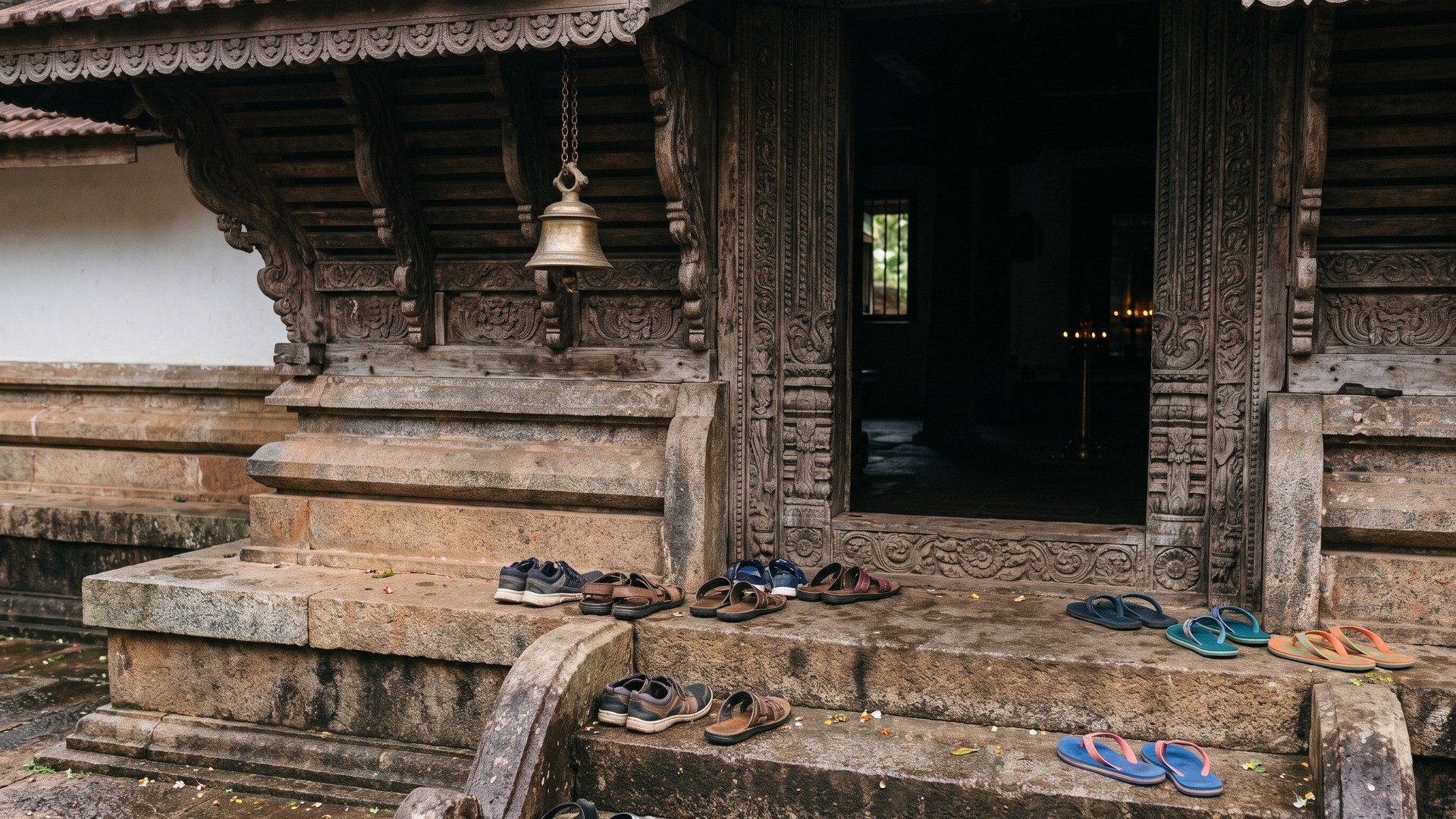
Remove your shoes before entering a temple or an Indian home, and dress conservatively once inside. At a gurdwara, a Sikh place of worship such as the Golden Temple in Amritsar, cover your head as well; coverings are provided. Many Hindu temples also prohibit leather articles such as wallets, belts and bags, so leave them with your shoes. Most temples welcome visitors of any faith, but some admit only Hindus, either throughout or in the inner sanctum, the Jagannath temple in Puri among them, so follow your guide's lead rather than assuming every door is open to you.
Inside, a few gestures matter. Never point at sacred items or paintings with your index finger; gesture with an open hand instead. Do not point the soles of your feet at altars or people, and sit cross-legged or kneel rather than stepping over anyone sitting on the floor. If a priest offers you prasad, a small sweet or fruit, accept it with your right hand. Kerala's official guidance also asks visitors to bathe and wear fresh clothes on the day of a temple visit, and to abstain from non-vegetarian food beforehand. Devotees walk clockwise around the sanctum in most temples, though at some Shiva temples the circuit is not completed in full; you stop at a particular point and retrace your steps. For a fuller walkthrough of shoes, leather, phones and which temples admit only Hindus, see this guide to Indian temple etiquette.
Why does the right hand matter so much?
In India, the right hand is for eating, giving and receiving, and the left hand is considered unclean, so avoid touching people with it. When you hand anything to anyone, use your right hand, or both hands, which reads as even more respectful. At a meal where you eat with your hands, touch the food only with your right hand; the left hand may hold utensils, glasses and bowls. Wash your hands before and after eating, which is expected anyway.
If you are left-handed, do not panic. Use your right hand for the visible gestures, giving and receiving, and do your best at mealtimes; hosts care far more that you tried than that you were clumsy. Nobody expects perfection from a visitor, and a namaste plus an effort with the right hand covers most social ground.
What are the common mistakes with cultural customs in India?
Even well-meaning travelers slip on the same few customs. These are the ones worth rehearsing before you land:
- Photographing people without asking. Always ask first, and respect a no. A camera pointed at a ceremony, a sadhu or a family is not neutral.
- Public displays of affection. Kissing and embracing in public are discouraged, even between spouses, though you may see same-sex friends holding hands, which is simply friendship.
- Pointing with your index finger. At sacred objects, paintings or people, it reads as rude; use an open hand.
- Stepping over people or pointing your feet. Feet and shoes are considered dirty, so walk around seated people, never over them, and keep your soles away from altars.
- Losing your temper. Displays of anger cost you goodwill and rarely speed anything up; patience is the local currency.
- Giving money or candy to children. It can encourage begging and draw a crowd around you. A smile, a few words or, with a parent's OK, showing kids their photo on your camera are better exchanges.
- Turning your back on a religious statue. In temples, keep your backside away from sacred icons, even while taking photos.
How do meals and invitations work?
Accept food when it is offered, bring a small gift such as a box of sweets if you are invited to someone's home, and do not feel obliged to finish your plate. Your hosts may sit and watch you eat; that is hospitality, not surveillance. Many Hindu and Jain hosts are vegetarian, and beef is off the menu in most of India, so follow your host's lead at the table.
Cultural etiquette in India extends to tipping, which is customary rather than required. A driver or guide who has spent a full day or more with you usually receives a tip at the end, handed over with your right hand or both hands, and a small tip for hotel porters is appreciated. If you are unsure what is usual, ask your hotel desk rather than guessing.
On the practical side, book a travel-clinic or doctor's visit about a month ahead for health questions; the CDC's India page for travelers also stresses safe food and water habits and washing your hands at key times. A cooking class in a family kitchen is one of the easiest ways to practice the mealtime customs with patient teachers.
What should you know about photography and sacred sites?
Ask before every photograph of a person, and respect a no without negotiation. Many temples ban phones and cameras outright and others allow photos only in outer courtyards, so look for signs or ask your guide before raising your phone. At mosques, dress as you would for a temple, and women should carry a scarf for the head.
A good habit is to treat worship as something you witness, not something you stage. Stand back during aarti, keep your voice low, and let your guide signal when photography is welcome. If a holy man near a temple ties a thread on your wrist, know that he may then ask for compensation; you can decline the thread in the first place.
How do you go beyond the tourist surface?
The customs above are your entry ticket, but the deeper reward comes from slowing down. Choose fewer places, spend at least three nights in each, and leave real time unplanned. The ordinary life one layer below the standard route, the kitchens, the makers, the quiet early mornings, is where these customs start to feel natural instead of performed. The Real India makes that argument at length, looking at why first visits so often stay on the surface.
This is also where a planner earns its keep. The Unbored Club, an India-based travel company that designs private, tailor-made India trips, plans around your pace and pairs you with local guides who can read a temple courtyard, a bazaar or a family kitchen with you. Planning directly with a team based in India puts you in touch with people who live these customs, with fewer intermediaries in between and access to experiences that rarely appear online. If that is the kind of trip you want, see how its private India trips work.
Want local guides who can explain each custom as it comes up? Tell The Unbored Club what kind of trip you have in mind and plan your India trip.
A few quick questions so we can design something truly personal for you.
