Most people meet the word panchakarma on a spa price list, somewhere between the hot-stone massage and the facial, and assume it is a long Ayurvedic pampering session. It is not. Panchakarma is a medical procedure, prescribed by a doctor, carried out in stages over days or weeks, and it was never designed to feel like a holiday.
If you are flying in from London, Frankfurt, New York or Melbourne with the idea of trying it, this is the honest version. It explains what panchakarma is, what the five procedures do, how long a real course takes and what it costs. Most useful of all, it explains how to tell a legitimate centre from a resort that has borrowed the vocabulary.
What is panchakarma, exactly?
Panchakarma is a structured Ayurvedic treatment designed to remove accumulated waste from the body and reset digestion, not a single massage or a weekend reset. The word is Sanskrit: pancha means five, and karma here means a physician's therapeutic action. So the name is literally the five actions.
In Ayurveda, India's classical system of medicine, illness is understood as an imbalance of three functional energies called doshas: vata, pitta and kapha. Panchakarma aims to draw that imbalance out of the tissues and expel it. It is governed in India by the Ministry of Ayush, the government department for Ayurveda, and practised most seriously in Kerala.
What are the five procedures of panchakarma?
The five are therapeutic vomiting, purgation, two kinds of medicated enema, and nasal medication, with bloodletting named by some schools in place of one. In the classical text attributed to the sage Charaka, they are vamana (physician-induced emesis), virechana (purgation), niruha basti and anuvasana basti (enemas with a decoction and with oils), and nasya (medicine given through the nose).
A second tradition, following Sushruta, counts raktamokshana (controlled bloodletting) as the fifth and treats the two enemas as one. You do not need the Sanskrit. The point is that these are clinical interventions, chosen and supervised by a doctor, not items you pick from a menu.
What actually happens on a panchakarma programme?
A genuine programme moves through three stages, and the famous five procedures are only the middle one. First comes purvakarma, the preparation. Your digestion is kindled. Then your body is softened inside and out with medicated ghee or oil, a step called snehana, and warmed with herbal steam, called swedana. This can take several days on its own.
Then comes the main treatment, pradhanakarma, when the prescribed procedures are carried out. Last is paschatkarma, the recovery: a carefully graded diet that rebuilds your digestion, plus rest and often rejuvenating tonics. Skip the first and last stages and you have not done panchakarma. You have had a massage.
We plan private Kerala trips around genuine Ayurveda, matching you with classified centres where a qualified physician leads the course and sets its length. Stays, transfers and quiet days around treatment are handled for you, and our team stays on hand while you travel. Plan a tailor-made Kerala trip.
Is panchakarma the same as an ayurveda detox or a spa day?
No. A spa day gives you a pleasant oil massage with no diagnosis and no aftercare, whereas panchakarma is a physician-led medical course with preparation, procedures and recovery. The confusion is understandable. Many resorts list treatments like abhyanga, a warm two-therapist oil massage, and shirodhara, a stream of oil poured onto the forehead, under the heading of panchakarma. Those are lovely, but on their own they are not panchakarma.
The quickest tell is the consultation. A real programme begins with a doctor assessing your constitution, what Ayurveda calls your prakriti, and prescribing accordingly. A spa simply books you in. In my experience the places worth your time are the ones that ask questions before they touch you.
How do you tell a real panchakarma centre from a spa menu?
Look for a registered Ayurvedic physician, government classification and proper medicines, not marble and background music. In Kerala this is easier than almost anywhere, because the state runs an official classification scheme for Ayurveda centres. The old Green Leaf and Olive Leaf certificates were replaced in 2019 by three current grades, Ayur Silver, Ayur Gold and Ayur Diamond, awarded by the Department of Tourism after inspection.
A classified centre must provide round-the-clock cover by qualified male and female doctors, government-approved therapists, treatment rooms built to specification, and medicines made to pharmaceutical standard. Whatever badge a centre shows, check two things. The treating doctor should hold a BAMS or an Ayurveda MD registered with the national council. The certificate should be current, not a lapsed Green Leaf.
Why is Kerala the home of panchakarma?
Kerala has an unbroken living tradition of Ayurveda, a humid climate well suited to the treatments, and the country's strongest regulation of centres. Ayurveda is woven into daily life here in a way it is not elsewhere in India. There are family lineages of physicians, a dense network of pharmacies growing and compounding their own herbs, and government oversight most states do not match. This is why panchakarma kerala is the phrase most visitors end up searching.
It is why I send travellers serious about treatment south rather than to a generic wellness resort. The depth of practice is greater. The coastal belt around Kochi and the quieter beaches to its south hold some of the most credible doctor-led centres in the country.
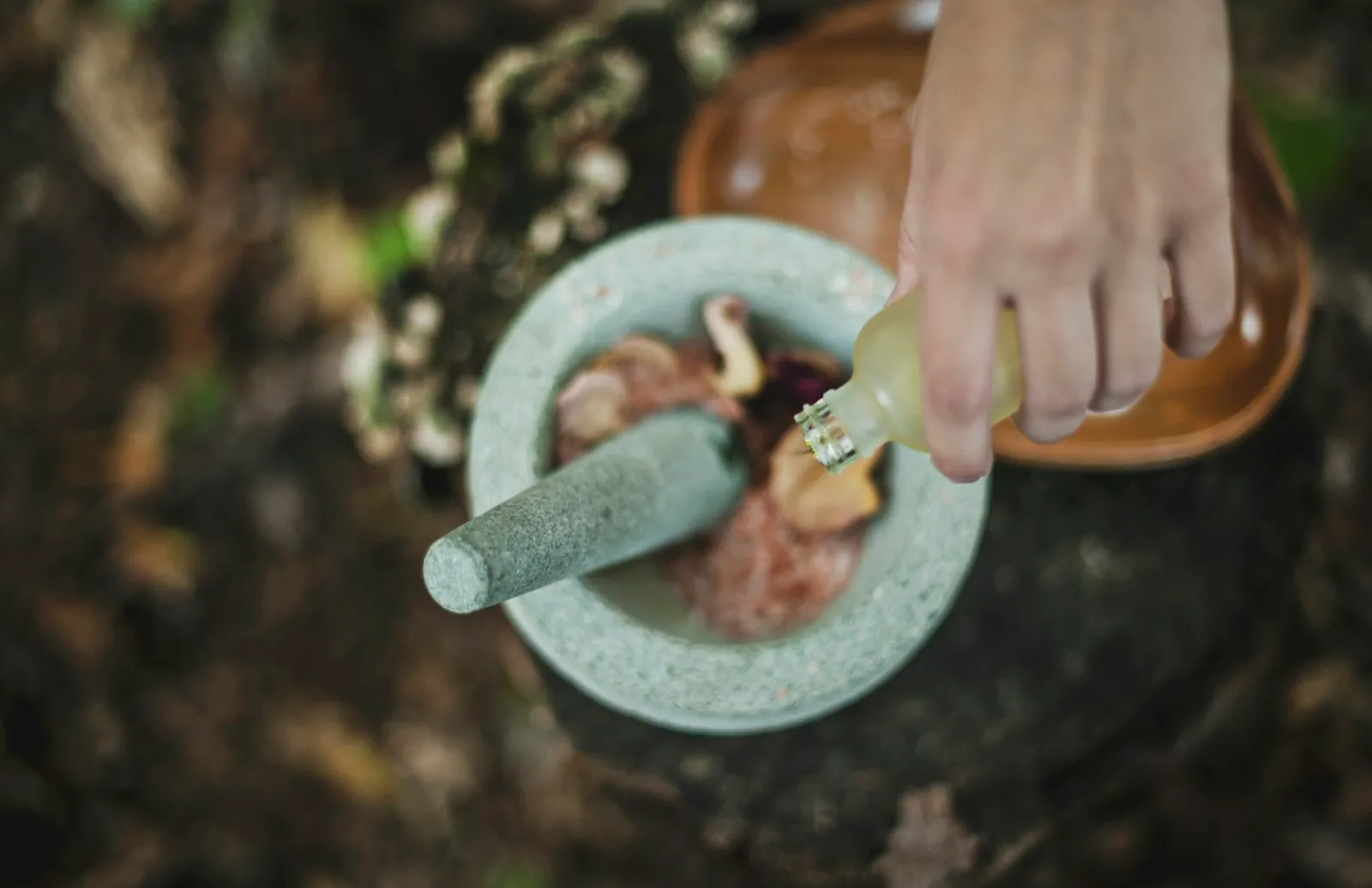
At a genuine centre, medicines are prepared on site rather than chosen from a spa menu.
When is the best time to come for panchakarma?
The monsoon, from around June to September, is traditionally considered the ideal season, which surprises most visitors. Kerala Ayurveda holds that the body absorbs treatment best when the air is cool and humid and the pores are open. The Malayalam monsoon month of Karkidakam, in July and August, is the classic season for rejuvenation. It even has its own medicated rice gruel, called karkidaka kanji.
That said, panchakarma runs year-round, and the dry months of November to February are far more comfortable for pairing treatment with wider travel. If treatment is the whole purpose of the trip, come in the monsoon; if it is one chapter of a longer journey, the cool season is kinder. Our guide to the best time to visit India sets out the regional seasons in full.
How many days does panchakarma take?
A meaningful course runs from about a week to three or four weeks, and anything sold as a few hours is not panchakarma. The treatment has three stages, and preparation alone takes several days. So a genuine residential programme is usually at least seven nights. A full classical course with all the procedures runs more often to fourteen, twenty-one or twenty-eight.
The exact length is a clinical decision, set by the doctor after your consultation, not a package off a shelf. A reputable centre will shorten or lengthen a programme once they see how your body responds. Treat any fixed course advertised without a prior consultation with suspicion.
How much does a panchakarma programme cost?
A doctor-led residential programme in Kerala typically runs from roughly ₹8,000 to ₹25,000 per person per night, about USD 83 to 260, or GBP 63 to 196, full board with daily treatment included. These are indicative planning ranges at rates in early October 2026, about ₹96 to the US dollar and ₹128 to the pound, and they move a great deal with the property and the season.
Over a week that lands somewhere between roughly ₹60,000 and ₹175,000 per person, about USD 620 to 1,820, or GBP 470 to 1,370. By contrast, a single oil massage at a resort spa might be ₹1,500 to ₹3,000, about USD 16 to 31, or GBP 12 to 24, and a one-off doctor consultation ₹1,000 to ₹1,500, about USD 10 to 16, or GBP 8 to 12. Confirm current prices directly with any centre, as these figures are a guide, not a quote. Our India trip cost guide covers the wider budget.
What should you eat and avoid during panchakarma?
You eat a light, warm, usually vegetarian diet chosen by the doctor, and you avoid alcohol, caffeine, cold food and heavy socialising. Digestion is the focus, so meals are simple and timed: often rice, moong dal, cooked vegetables and medicated gruels rather than anything rich. In the recovery stage, food is reintroduced in careful steps, a process called samsarjana krama, to rebuild the digestive fire the procedures deliberately rested.
This is also why panchakarma is not a sociable holiday. Most centres ask you to slow right down, sleep early, avoid screens and skip the sightseeing.
Does panchakarma actually work? An honest look.
Many people report feeling lighter, calmer and better rested, though the scientific evidence is limited and mixed, so it is best approached with an open but realistic mind. Ayurveda is a recognised medical system in India with a long clinical tradition and a growing but still early body of modern research. It is not a substitute for conventional medicine, and a good physician will tell you so.
What panchakarma reliably offers is a structured, supervised period of rest, clean eating and daily therapy. That alone leaves most people feeling restored. Treat it as a considered reset under qualified care rather than a cure, and keep your own doctor at home informed if you have a health condition.
Who is panchakarma best suited for?
It suits people who want a slow, serious wellness reset and are willing to follow a disciplined routine for at least a week. Picture handing your days over to a doctor, eating simply, resting deeply and emerging genuinely rested. If that appeals, it can be one of the most restorative things you do in India.
It works less well for travellers who want treatment alongside a packed itinerary, for anyone expecting a luxury spa, or for those who find restriction stressful rather than freeing. Couples sometimes do it together and find one partner loves it while the other is restless by day three. It rewards the curious and the patient.

Kerala's coast and backwaters hold many of India's most credible doctor-led Ayurveda centres.
Who should not do panchakarma, or should check first?
Some people should not begin panchakarma without first clearing it with both an Ayurvedic physician and their own doctor at home. That includes anyone pregnant, frail, recovering from surgery, or managing a serious medical condition. Some procedures are physically demanding, and the stronger purificatory techniques are not suitable for everyone.
Be honest at your consultation about any medication you take and any condition you live with. A responsible centre will adapt the programme, soften it, or decline to treat you, and that caution is a sign of a good one. Defer to qualified medical advice over anything in a guide, including this one.
What do first-time visitors get wrong about panchakarma?
The commonest mistake is booking a short spa package and believing they have done panchakarma. Close behind: expecting it to be relaxing in a holiday sense, trying to sightsee through it, and choosing a centre on its photographs rather than its doctor.
Others underestimate the recovery stage and fly home the morning treatment ends, when the body is still settling. A few arrive hoping to lose weight fast, which is not the point. Go in understanding that this is medicine, give it the full week it needs, and build a day or two of rest around it.
How does panchakarma fit into a wider India trip?
Place it at the end of your trip, not the start, so the treatment sends you home restored rather than being interrupted by onward travel. A natural shape is to travel first, through temples, backwaters and hills, then finish with a week of treatment on the Kerala coast before flying out of Kochi.
This is how I build it for travellers who want both: see the country while you have energy, then let the trip wind down into stillness. Our ten-day Kerala itinerary and our wider wellness route through India both show how a treatment week sits inside a longer journey, and the backwaters make a gentle lead-in.
What should you prepare before you arrive?
Clear your calendar, pack light and comfortable clothing you do not mind getting oily, and arrive ready to slow down. Loose cotton, slip-on sandals and a modest set of clothes for the treatment rooms are more useful than anything smart. Bring any regular medication and a note of your medical history for the consulting doctor.
For visas, vaccinations and travel health, follow official sources rather than any blog. Apply through the Indian government visa portal, and speak to a travel clinic before you fly. Requirements vary by nationality and change over time, so check your own government's current advice too.
Frequently asked questions
Is panchakarma safe for foreigners?
Generally yes, at a properly classified, doctor-led centre, provided you are honest about your health and follow the physician's guidance. The risks come from unregulated centres and from strong procedures done without proper assessment, which is why the consultation and credentials matter so much.
How is panchakarma different from an ayurveda detox package?
An ayurveda detox package is often a short, gentle resort programme. True panchakarma is a longer, physician-prescribed medical course with distinct preparation, treatment and recovery stages. Detox packages can be worthwhile, but they are a lighter thing than classical panchakarma.
Can I do panchakarma in a week?
You can do a short, supervised version in a week, though a full classical course usually runs two to four weeks. A week is enough for a meaningful, doctor-led reset; it is not enough for the longest traditional programmes. Your physician will advise what is realistic for your time.
Where is the best place for panchakarma treatment in India?
Kerala is widely regarded as the home of panchakarma treatment, thanks to its living tradition, its climate and its official classification of centres. The coastal belt around Kochi and the quieter beaches to its south hold many of the most credible doctor-led programmes.
Will I feel unwell during panchakarma?
Some people feel tired, light-headed or emotionally tender during the treatment, which practitioners regard as part of the process, so rest is built in. A good centre monitors you and adjusts the programme if you are struggling. Tell your therapists and doctor how you feel each day.
Do I need to be vegetarian for panchakarma?
Yes, for the duration. The prescribed diet is light and usually vegetarian because the treatment is built around resting and rebuilding digestion. It is only for the length of the programme, not a permanent change you need to make.
Planning a panchakarma stay with the right centre
A good panchakarma experience is not about the prettiest resort. It is about the right doctor, a properly classified centre, and enough time for the treatment to do its work.
We help first-time visitors find genuine, doctor-led panchakarma in Kerala and build it into a wider India journey, so the treatment is real and the trip around it is a pleasure. If you would like a stay shaped around your own dates, health and pace, Plan my India trip.