The best way to see the Taj Mahal without the crowds is to arrive at sunrise, the moment the gates open, with your ticket already booked. The first hour is the calmest and coolest of the day, and the soft early light is when the white marble does its most beautiful work. I have done this morning many times, and the difference between rushing in at midday and arriving early is the difference between seeing the Taj and actually feeling it.
Almost everyone arrives already knowing what it looks like, which is the trap. Most first-timers take the same photo as the person beside them and leave within the hour. This guide covers what you need, the best time to visit, tickets and timings, which gate to use, how long to stay, and the quieter art of arriving well. It sits inside a wider route in our two-week north India itinerary.
Why does the Taj Mahal feel so different at sunrise?
At sunrise the Taj is quieter, cooler and lit by soft, changing light. The crowds are thin in the first hour, the heat has not built, and the building seems to shift colour as the sun climbs. The marble is not a flat white. It is slightly translucent, so it picks up whatever the sky is doing. Around dawn it can read as pale grey, then blush pink, then warm cream, then the bright ivory you know from photographs. Stand still for ten minutes and you will watch the dome change.
Early in the morning you can also hear birds and the breeze through the gardens. A Taj Mahal sunrise is as much about that hush as the view.
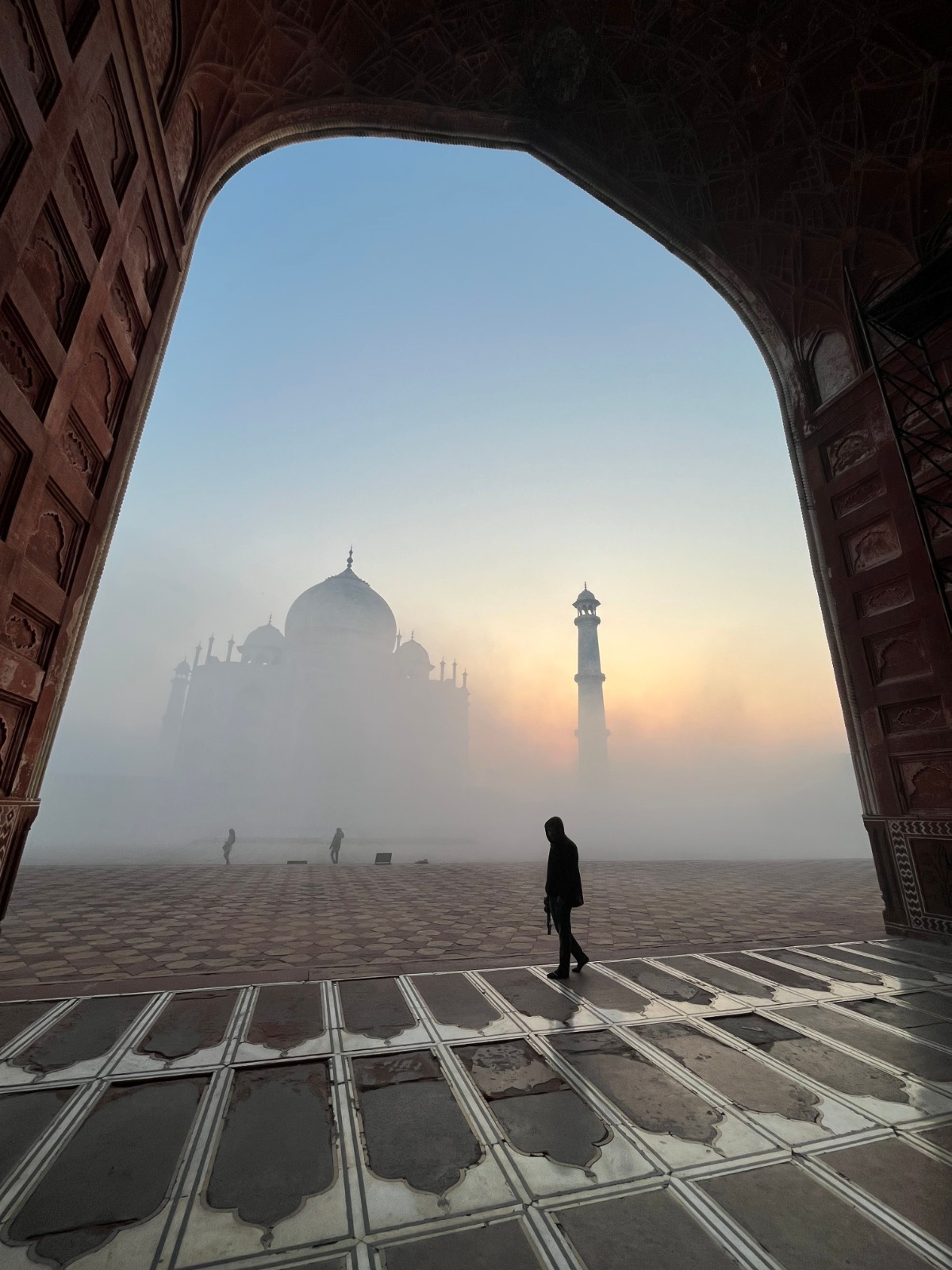
Winter mornings bring mist off the Yamuna River, the Taj becomes a ghost of itself, materialising slowly as the light changes.
What is the best time to visit the Taj Mahal?
The best time to visit is October to February, when northern India is cool and dry, and within any day the first hour after opening at sunrise. Avoid the peak heat of May and June, and expect humidity and sudden rain during the July to September monsoon. Our best time to visit India guide sets the wider seasonal picture.
| Season | When | What to expect |
|---|---|---|
| Cool season | Oct – Feb | Most comfortable. Clear light. Dec and Jan can bring early fog that veils the Taj until mid-morning. |
| Hot season | Mar – Jun | Very hot, often past 40°C. Harsh light, marble too hot to walk on barefoot by midday. Sunrise is essential. |
| Monsoon | Jul – Sep | Humid and green, with cleaner air and dramatic skies. Downpours are unpredictable; mornings between showers can be lovely. |
If your dates are flexible, aim for late October to February and build your Agra morning around sunrise. Whatever the month, give Agra a full overnight rather than a rushed day trip, so the early start is gentle rather than brutal.
How do you actually see the Taj Mahal without the crowds?
Arrive before the gates open at sunrise, buy your ticket in advance, and walk straight to the main viewing platform before stopping for photos. The first 45 minutes are the calmest of the day. The crowds build fast once the tour groups arrive mid-morning, so your whole advantage is being early.
- Stay in Agra the night before. A same-day trip from Delhi means leaving in the small hours and arriving tired.
- Book your ticket ahead, ideally online, so you are not queueing while the best light passes. Keep your passport handy.
- Go on any day except Friday, when the complex is closed to sightseeing. Weekends and public holidays are busiest.
- Walk past the famous bench at first. Everyone stops there immediately and it bottlenecks. Take your quiet photos near the platform, then circle back.
- Move toward the building, not away from it. The garden paths along the sides and the area behind the Taj, facing the Yamuna, stay noticeably emptier.
None of this needs special access. It needs an early start and the discipline not to raise your camera the second you walk in. The travellers who linger almost always call the morning the highlight of their trip.
A good local guide can lift the whole morning. The right one brings the storytelling that turns white marble into living history, and knows the quiet corners and photo spots most visitors walk straight past.
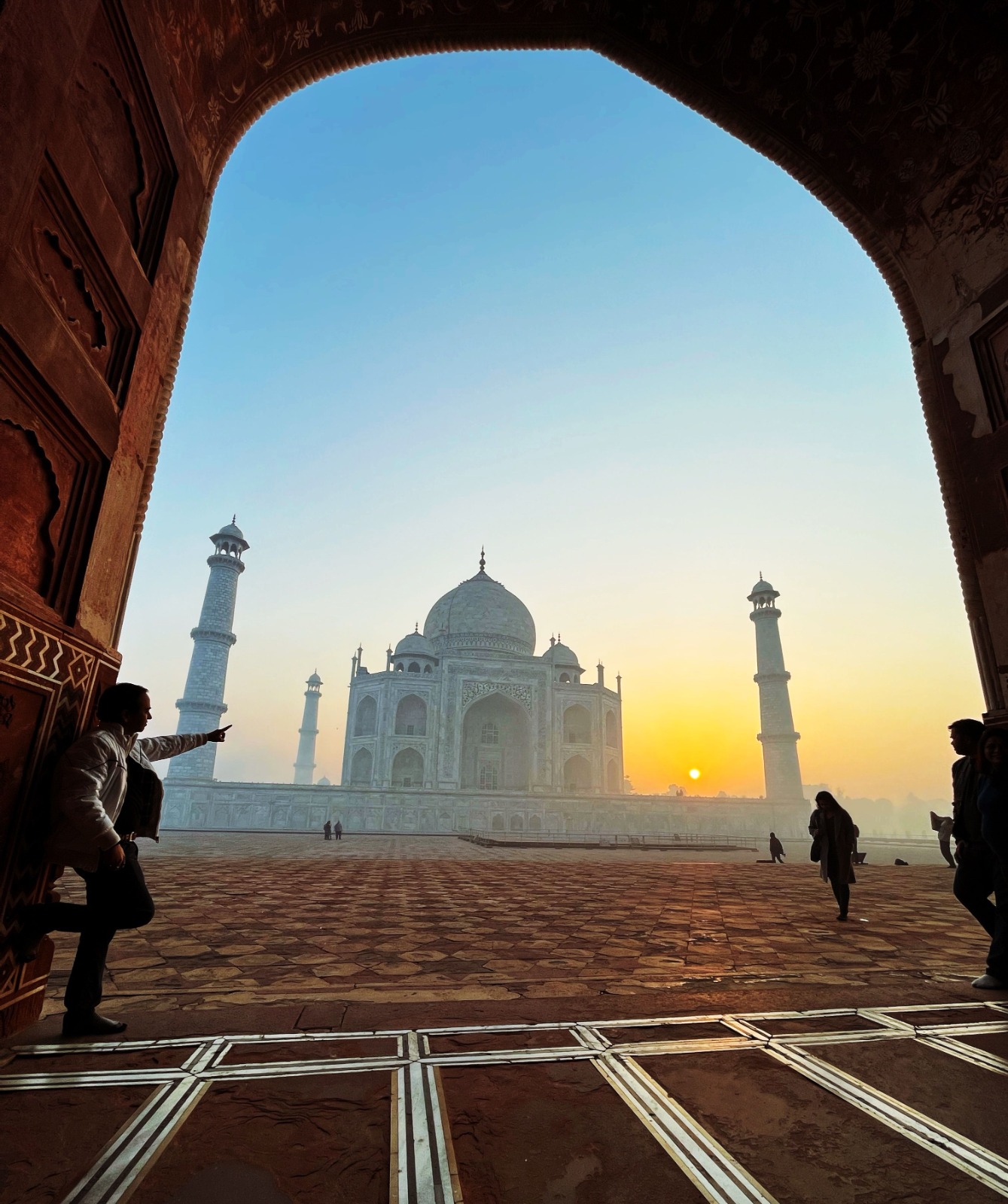
Arriving before the coach groups means you get the forecourt almost to yourself, those first fifteen minutes are irreplaceable.
What should you know about tickets, timings and gates?
The Taj Mahal opens about 30 minutes before sunrise and closes about 30 minutes before sunset, every day except Friday. Foreign visitors pay a higher entry fee than Indian nationals, with a small extra charge to enter the main mausoleum, and young children usually enter free. Prices and rules change, always check the official Taj Mahal site or the ASI ticketing portal close to your travel date.
- Timings: roughly sunrise to sunset, shifting with the season. Gates open later in winter, earlier in summer.
- Closed Fridays: open only to those attending midday prayers at the mosque. Plan your Agra day for any other day.
- Gates: there are three, West, East and South. The West gate is closest to town and efficient; the East gate is often quieter at opening; the South gate opens slightly later.
- Night viewing: offered on five nights around each full moon with separate tickets and tighter rules, not on Fridays or during Ramadan.
- Security is thorough and the banned-items list is long. Large bags, tripods, food and many electronics are not allowed. Travel light: a phone, a camera, your ticket, passport and water.
For the view, resist planting yourself dead centre with everyone else. The symmetry is glorious from the middle, but the early light is often best from the side, where you catch the dome and one minaret against the open sky. Walk the platform, step into the gardens, and go round to the back above the river, where far fewer people venture.
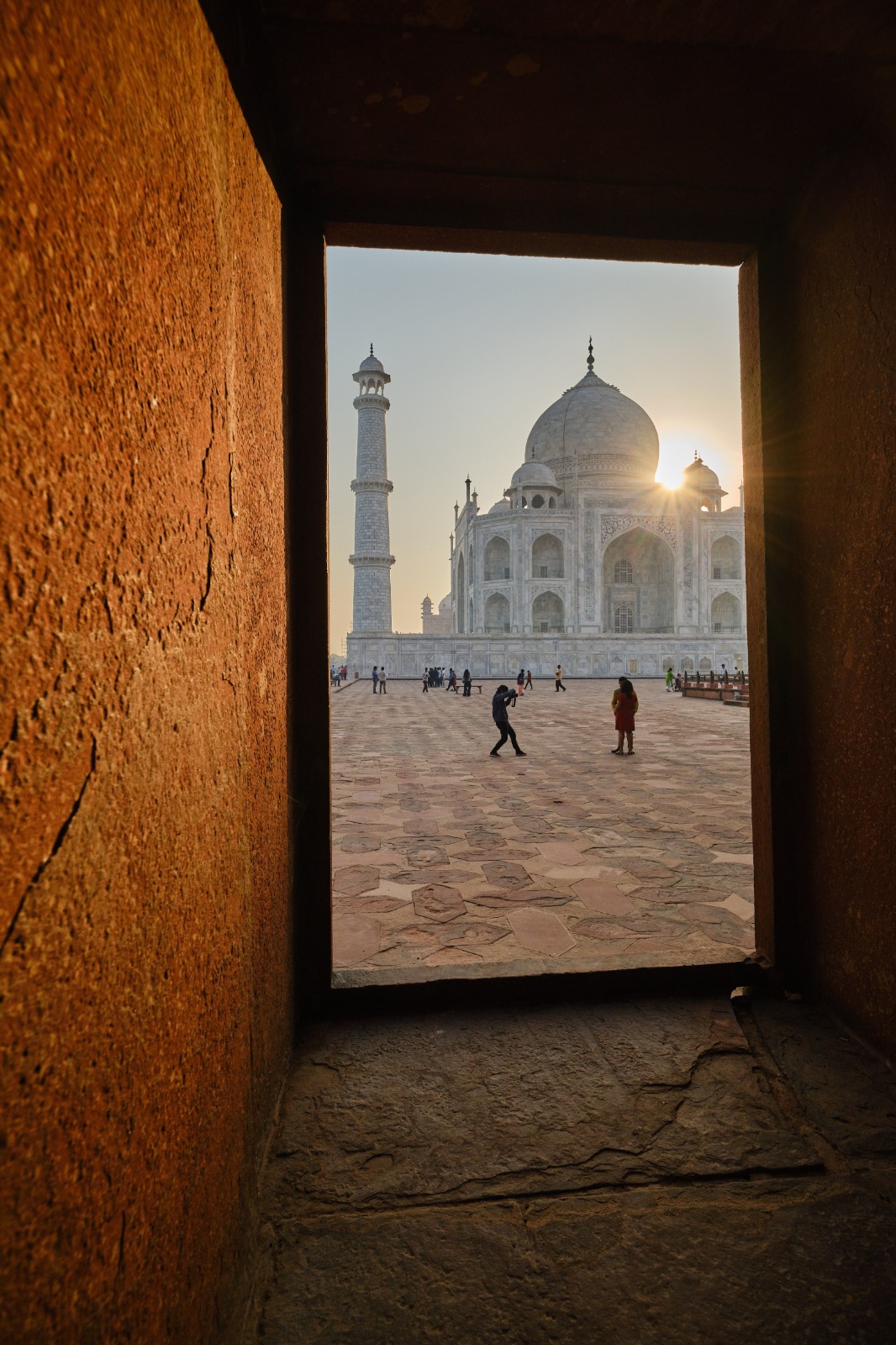
The smaller windows and doorways within the complex offer framings most visitors walk straight past.
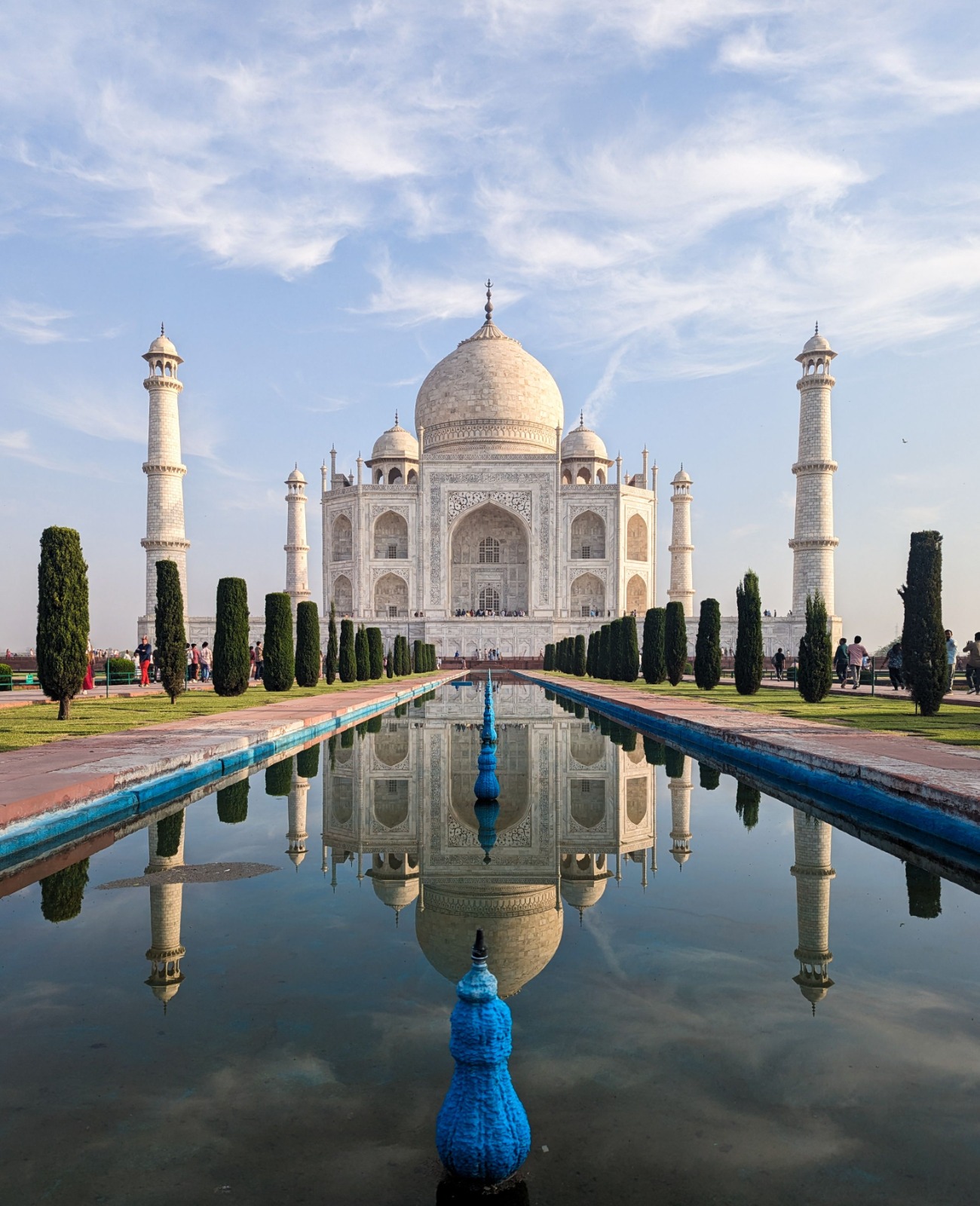
The reflection pool image requires arriving before 8am, later, the foreground fills with visitors.
How long should you spend, and what else is in Agra?
Plan for at least two to three hours, starting at opening. That gives you time to watch the light change, walk the Mughal gardens, step inside the mausoleum and simply sit. An hour, which is all many tours allow, is the single most common reason people leave underwhelmed.
Agra is also more than the Taj, and most day trips skip the rest, which is a quiet shame. A few experiences worth building in:
- Rural Agra: Step beyond the city into the rustic charm of Agra's countryside on a guided rural tour. Peaceful villages, local farming families, traditional crafts, and panoramic views of the Taj from lesser-known vantage points.
- Agra Fort and other monuments: Explore the red sandstone fort where Shah Jahan spent his final years imprisoned by his son, reportedly gazing at his wife's tomb in the distance, plus quieter gems like the Baby Taj that most day trips skip.
- Artisan Studio Trail: Meet the marble inlay, embroidery and miniature artists keeping Mughal crafts alive, in genuine working studios rather than tourist showrooms.
- Pattal ki Dawat: Dine on traditional dishes served on leaf plates and taste the flavours of old Agra.
This is why I push travellers to give Agra a night rather than treating it as a stop between Delhi and Jaipur.
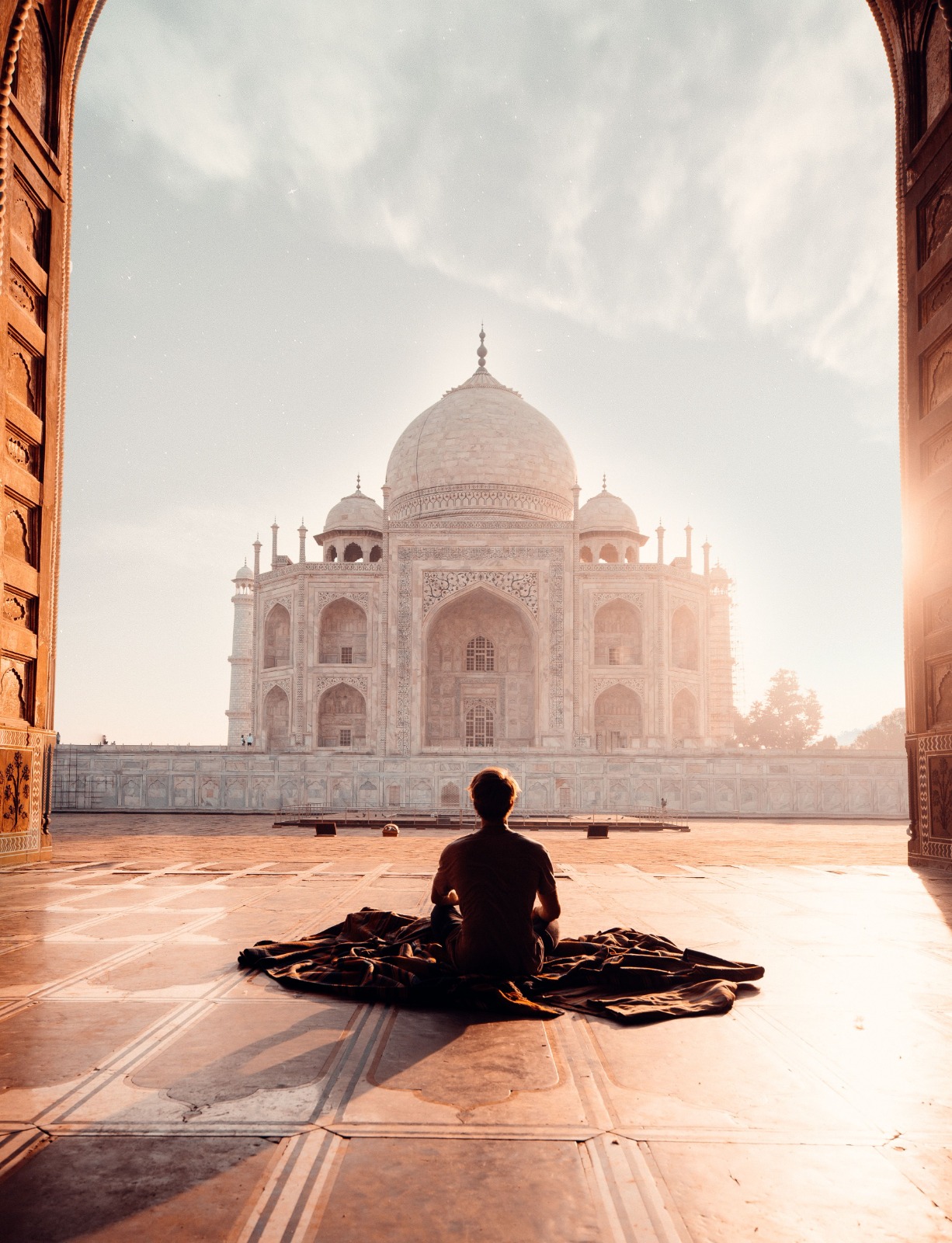
From the mosque's inner arches, you can sit with the Taj at close range with almost no one else around, especially in the first hour after opening.
Is the Taj Mahal worth visiting, honestly?
Yes, but how you visit decides whether it feels extraordinary or anticlimactic. As a one-hour photo stop in the heat, it can disappoint. As an unhurried sunrise morning with time to explore the wider complex, it lives up to its reputation and often exceeds it.
I try to be honest about the trade-offs. Agra can feel chaotic, the touts near the gates are persistent, and the peak-season crowds are real. But those are logistics, and logistics can be planned around. The building itself is not overrated, it is one of the few famous sights that genuinely earns its fame, as long as you give it the conditions to do so. Agra has more to it than the one monument, as our guide to travelling beyond the Golden Triangle shows.
- Arrive at opening, sunrise is always the right answer
- Stay in Agra the night before; don't attempt a same-day trip from Delhi
- Book tickets online in advance, skip the queue entirely
- Use the West or East gate, not the South gate
- Walk past the famous bench first; circle back once crowds thin
- Allow 2–3 hours minimum; pair with Agra Fort and the Baby Taj for a full day
- Full moon night visits: apply months in advance for peak season
- No Fridays, closed to general sightseeing
Frequently asked questions
What is the best time of day to visit the Taj Mahal?
Sunrise, in the first hour after the gates open. The light is soft and changing, the air is cool and the crowds are thinnest. Late afternoon toward sunset is the second-best option, often viewed from Mehtab Bagh across the river.
Is the Taj Mahal closed on any day?
Yes. It is closed to general sightseeing every Friday, when access is limited to those attending midday prayers at the on-site mosque. Weekends and public holidays are the most crowded.
How much does it cost to enter the Taj Mahal?
Foreign tourists pay a combined entry fee of around $14, including a small extra charge to go inside the main mausoleum. Fees change, check the official ticketing site and book online to save time.
How long do you need at the Taj Mahal?
Allow two to three hours at minimum to absorb everything the Taj has to offer. An hour is not enough.
Can you visit the Taj Mahal at night?
Limited night viewing is offered on five nights each month around the full moon, with separate tickets and stricter rules, no access on Fridays or during Ramadan. For most visitors, sunrise is more reliable and rewarding.
Is one day in Agra enough?
A single morning is enough for the Taj itself, but Agra rewards an overnight. With one night you can see the Taj at sunrise, plus Agra Fort, the Baby Taj, the marble artisans and the sunset view across the river.
If you would like a morning like this built into your trip, with the early start handled and the rush taken out of it, tell us how you want to travel and we'll build around it.