Yes, you can travel solo in India, and thousands of people do it happily every year. The honest version is that solo travel in India works best when it is planned with intention rather than improvised. India rewards a lone traveller with a curiosity and hospitality that couples and groups rarely receive. It also asks more of you, in patience, judgement and preparation, than almost anywhere else you might go first. This is the calm version of the answer, including the safety parts other guides tend to skip.
It is written for someone flying in from London, Toronto, New York, Melbourne or Frankfurt who wants to see India on their own terms and has sensibly paused over the safety question. It answers the practical things: whether it is safe, what the advisories really say, how solo women travel here, where to go first, how you move around, what it costs once you have nobody to share a room or a car with, and the scams worth knowing before you land.
Is India safe for solo travellers?
For most visitors, on the ordinary tourist routes, India is safe for solo travel with sensible precautions. The country that reaches the news through its worst stories is not the one most solo travellers experience on a well-planned trip through Kerala, Rajasthan or the hills of the north. Petty theft, persistent touts and the occasional scam are the realistic daily risks, not the dramatic ones, and most trips pass without incident. I cover the wider picture in our honest guide to whether India is safe for first-time visitors.
India is not a place to switch your judgement off, though. The same awareness you would use alone in any large, unfamiliar country applies here, turned up a notch because you will often be the most visible person in the room. Keep valuables discreet, use booked transport, avoid unlit and isolated places after dark, and trust the instinct that tells you to leave. None of that is unique to India; it simply matters more on your own.
What do the official travel advisories actually say?
As of October 2026, both the UK and the United States place India under a moderate, country-wide caution while advising strongly against travel to specific conflict and border areas. Read them yourself rather than taking any blog's word for it.
The UK Foreign, Commonwealth and Development Office (FCDO) advises against all travel to the union territory of Jammu and Kashmir, including Srinagar, Gulmarg, Sonamarg, Pahalgam and the Jammu to Srinagar national highway, with narrow exceptions for Jammu city itself. It advises against all travel within 10 kilometres, about 6 miles, of the India to Pakistan border, and against all but essential travel to the state of Manipur in the northeast. It also flags areas affected by Naxalite, that is Maoist insurgent, activity in parts of Chhattisgarh, Jharkhand, Odisha, Madhya Pradesh and Maharashtra.
The US State Department sets India at Level 2, "exercise increased caution", across the country, with Level 4 "do not travel" warnings for Jammu and Kashmir (excepting eastern Ladakh and Leh), the India to Pakistan border, the Maoist-affected belt of central and eastern India, and Manipur. The point for most readers is simple: none of these zones sits on the standard tourist map. Kerala, Rajasthan, the Golden Triangle of Delhi, Agra and Jaipur, Goa, Rishikesh and the temple south are all well clear of them. Check the current wording before you book, because advisories change.
Is India safe for solo female travellers?
This is the question that deserves a straight answer rather than reassurance. Both the FCDO and the US State Department advise women against travelling entirely alone in India, and the FCDO states plainly that female travellers have experienced verbal and physical harassment, and that some have been victims of serious sexual assault. I am not going to talk you out of reading that; it is the official position and it is there for a reason.
What I can tell you, from designing trips for solo women who have gone on to have calm, happy journeys here, is how the gap between that warning and the common experience is usually bridged: by structure. A solo woman with pre-booked accommodation, a known driver for road days, daytime arrivals and a local contact in each place has a very different trip from one improvising late-night buses and street taxis. The ones who thrive build a confident scaffolding first, then relax inside it.
The habits that matter more for solo women: dress on the conservative side of local norms, keep your evenings in populated and well-lit areas, use women-only train compartments where they exist, and decline unsolicited help from men who attach themselves to you. A polite but final "no", repeated without explanation, is your most useful phrase. India's hospitality is real and warm, and it coexists with the need for clear boundaries.
We plan private trips for solo travellers with safety built in from the start: vetted stays, a dedicated driver, trusted local guides and a team you can reach at any hour. The route is built around your pace and interests, and plans can change while you travel. See how our private India trips work.
Where should a first solo trip to India actually go?
For a first solo trip, choose the gentler regions and resist the urge to cross the whole country. Kerala, in the far south, is the single easiest introduction: slow, green and relatively hassle-light, with backwaters, which are a calm network of canals and lagoons, plus tea hills and a strong homestay culture. South India more broadly, including Tamil Nadu's temple towns, is calmer and shorter in its distances than the north.
In the north, the Golden Triangle of Delhi, Agra and Jaipur is the classic first route and works well solo because the infrastructure is dense and the legs are short: Delhi to Agra is roughly 230 kilometres or 143 miles, about three and a half to four hours by road, and Agra to Jaipur is around 240 kilometres or 150 miles, roughly four to five hours. Rishikesh, in the Himalayan foothills, draws solo travellers for yoga and quiet, with a gentle, community feel. Goa suits a first solo beach stretch, with an established traveller scene.
I would steer a first-timer away from a punishing multi-region loop and anywhere currently under an advisory. The best solo trips here are narrow and deep: two or three bases, properly explored, rather than eight in a fortnight. Our first-timer's roadmap to planning a trip to India walks through the sequencing.
How do you get around India on your own?
The most reliable way for a solo visitor to move between cities is a private car with a professional driver for road days, with trains on the longer, flatter stretches. Driving yourself is not recommended for first-timers.
A private car and driver is not a luxury in India in the way it sounds abroad. It is the normal, mid-range way visitors cover ground: an air-conditioned sedan or small SUV with a driver who knows the roads, waits while you explore, and stops where it is sensible to stop. For a solo traveller it removes the most stressful part of the day, which is negotiating transport in an unfamiliar place while carrying your bags. Indicative cost is roughly ₹4,000 to ₹8,000 per day including fuel, about USD 42 to 83, or GBP 31 to 63, at rates current in October 2026, and a solo traveller bears that whole cost rather than splitting it. We build our clients' road days around vetted, repeat-booked drivers precisely because a lone traveller's comfort rests so heavily on who is behind the wheel.
Within towns you will use the auto-rickshaw, a three-wheeled open taxi known locally as an auto, or app-based cabs in the bigger cities. Agree the fare before you set off, or use an app so the price is fixed and the journey is tracked.
How do trains work for a solo traveller?
Indian trains are one of the best parts of travelling here, and they are manageable solo once you understand the classes and book ahead. The network is booked through the official IRCTC system, which sets aside a quota for foreign tourists on many routes.
For a solo visitor, the air-conditioned classes are the ones to choose. AC Chair Car (CC) is airline-style seating for daytime journeys. AC 2-tier (2A) and AC 3-tier (3A) are air-conditioned sleeping berths, with 2A curtained for a little privacy, and both are comfortable and used by ordinary Indian families. Sleeper class (SL) is open, not air-conditioned and far busier, which many solo women find less relaxing. Several express services run women-only compartments, and there is a ladies' reservation quota on many trains, both worth asking about. Reserve well ahead, because popular trains sell out weeks in advance.
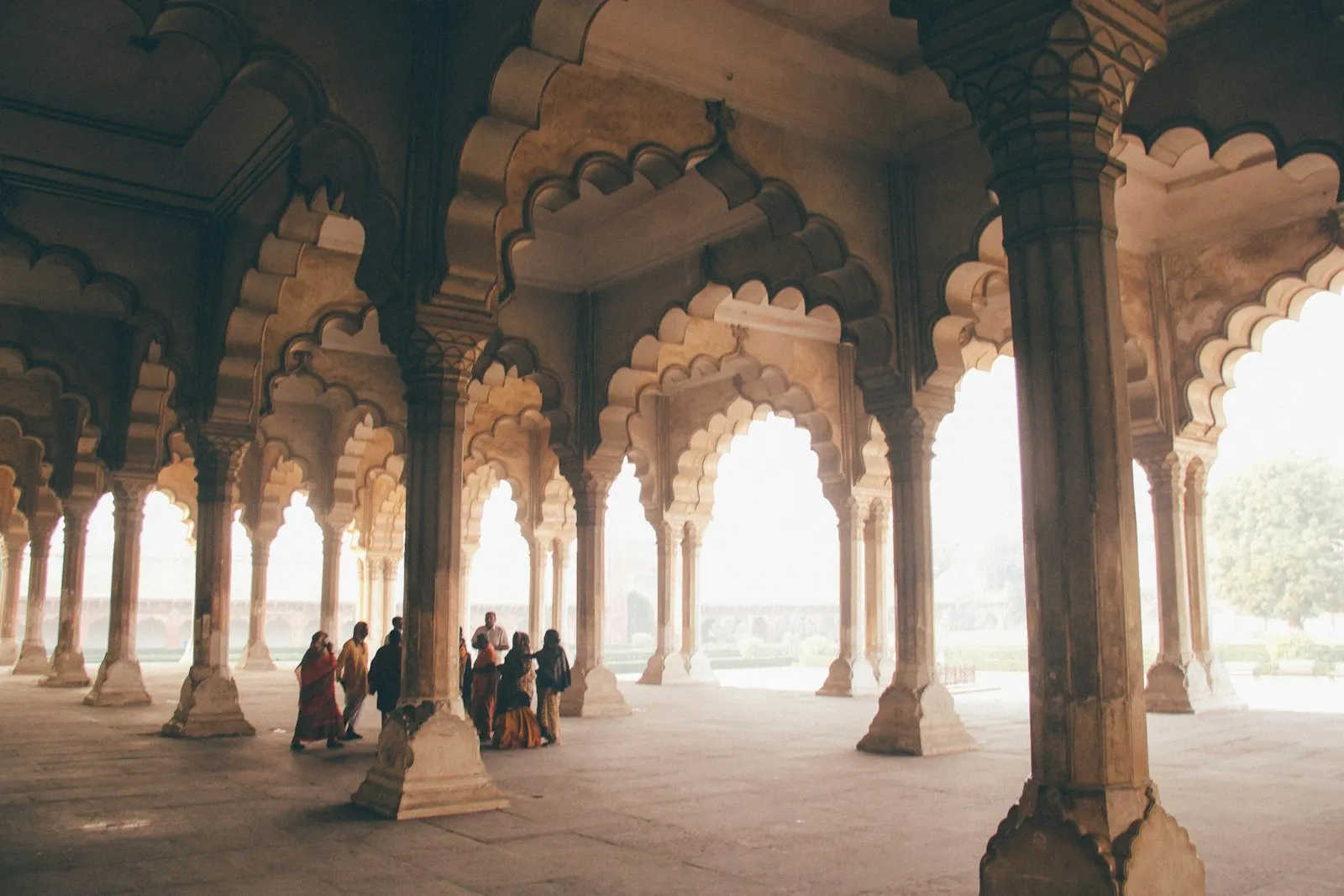
The colonnades of the Red Fort in Delhi, an easy first stop on a solo Golden Triangle route.
How much does solo travel in India cost?
Solo travel in India costs more per person than the same trip shared, because you carry the full price of a room and a car alone. This single-occupancy premium is the figure most first-timers forget, and the main reason a solo trip looks pricier than the "India is cheap" headline suggests.
As working daily ranges, excluding international flights and using roughly ₹96 to the US dollar and ₹128 to the pound, the rate in October 2026:
- Budget solo travel, using hostels, trains and street food: roughly ₹2,500 to ₹4,500 per day, about USD 26 to 47, or GBP 20 to 35.
- Comfortable mid-range solo travel, with good hotels and some private transport: roughly ₹7,000 to ₹14,000 per day, about USD 73 to 146, or GBP 55 to 109.
- Private, fully supported solo travel, with boutique or heritage stays and a car and driver throughout: roughly ₹14,000 to ₹30,000 per day, about USD 146 to 313, or GBP 109 to 234.
Individual components move with season and demand, so treat these as planning ranges. A simple restaurant meal might be ₹250, about USD 3, while a hotel dinner runs to ₹2,500, about USD 26. Many hotels charge a single-occupancy rate higher than half the double rate, and a car costs the same whether one person or three sit in it. The lever that moves the total most is your choice of accommodation and how much private transport you use, which is also the theme of our transparent breakdown of what a trip to India costs.
Arrivals, late-night landings and your first 48 hours
Plan your arrival for daylight where you can, and book your first hotel night for the day before you land so the room is yours on arrival. Many long-haul flights from Europe and the Gulf reach India between two and five in the morning, when a jet-lagged solo traveller least wants to be sorting a room or a taxi.
Arrange an airport pickup through your hotel for the first transfer, rather than taking a cab from the rank at 3am in a new country. Give your first full day to nothing more ambitious than a walk, a good meal and sleep. Travellers from Europe lose around five hours flying east; those from North America lose nine to twelve, and should treat the first two days as recovery. Starting slowly is not wasted time.
Do you need a visa, and what about health?
Yes, almost all visitors need a visa, and for many nationalities an electronic tourist visa (e-Visa) is available online. As of October 2026, citizens of the UK, most of Europe, the United States, Canada, Australia and New Zealand can generally apply for a tourist e-Visa, with different validity options. Fees, validity, eligible airports and the rules change regularly, so apply only through the official Indian government visa portal, not the look-alike sites that charge a markup, and confirm the current position before booking flights. Our walkthrough of India's tourist visa goes step by step, but the official portal is always the last word.
On health, speak to a travel clinic or your own doctor well before you fly about vaccinations and any anti-malarial advice, which varies by nationality, region and season. Carry rehydration salts and anything you take regularly, drink bottled or filtered water with the seal intact, and give your stomach two or three days to adjust. These things change, so verify them officially rather than relying on any article, this one included.
What should you wear, and how does dress actually work?
Dress modestly and practically: shoulders and knees covered, loose natural fabrics, and shoes you can slip off easily for temples and homes. This is not about fear, it is about comfort and respect, and it reduces unwanted attention noticeably, which matters more when you travel alone.
Loose cotton or linen trousers, longer skirts and tops that cover the shoulders work almost everywhere. A large scarf is the single most useful thing a solo traveller can carry: it covers your head in a temple or a gurdwara, which is a Sikh place of worship, your shoulders in strong sun, and your lap on a cold bus. In temples you will remove your shoes, and some South Indian temples ask men to remove their shirts in inner areas. Pack a warm layer for the hills, where mornings in a place like Munnar can drop to twelve or fifteen degrees Celsius, the mid fifties Fahrenheit, even on a tropical itinerary.
How do you handle staring, attention and harassment?
Expect some attention, treat most of it as curiosity rather than threat, and keep a firm, unbothered response ready for the small share that is not. Staring is common, usually not hostile, and easiest to meet with calm indifference. Requests for selfies are frequent, especially with women, and you are entirely within your rights to decline every one.
The harassment the advisories describe is real and should not be minimised. Reduce your exposure with the habits already covered: lit, populated areas after dark, booked transport, conservative dress, and distance from men who attach themselves to you uninvited. If something crosses a line, make a scene rather than staying polite; drawing attention is protective, not embarrassing. Keep the emergency numbers in your phone: 112 is the national emergency line, 1091 the dedicated women's helpline, and 1363 the Ministry of Tourism's 24-hour tourist helpline, in several languages. Save your accommodation's number, and tell someone your plans for the day.
The scams worth knowing before you go
Most scams aimed at solo travellers are variations on a few themes, and knowing them removes almost all their power. None is dangerous if you simply walk away.
The common ones: the "your hotel is closed or overbooked" routine from a tout who then steers you to a place that pays him commission; the pre-paid taxi booth that is not the official one; gemstone and carpet "investment" schemes where you carry goods home; and the friendly stranger whose warmth leads, eventually, to a shop. Insist on the accommodation you booked, confirm by calling the hotel, use official pre-paid taxi counters or apps, and never buy anything you were walked to by a new acquaintance. The FCDO also warns about drink and food spiking and about dangerous bootleg alcohol, so watch your drink and buy from licensed outlets. A calm "no, thank you" and a steady walk away ends almost every one of these.
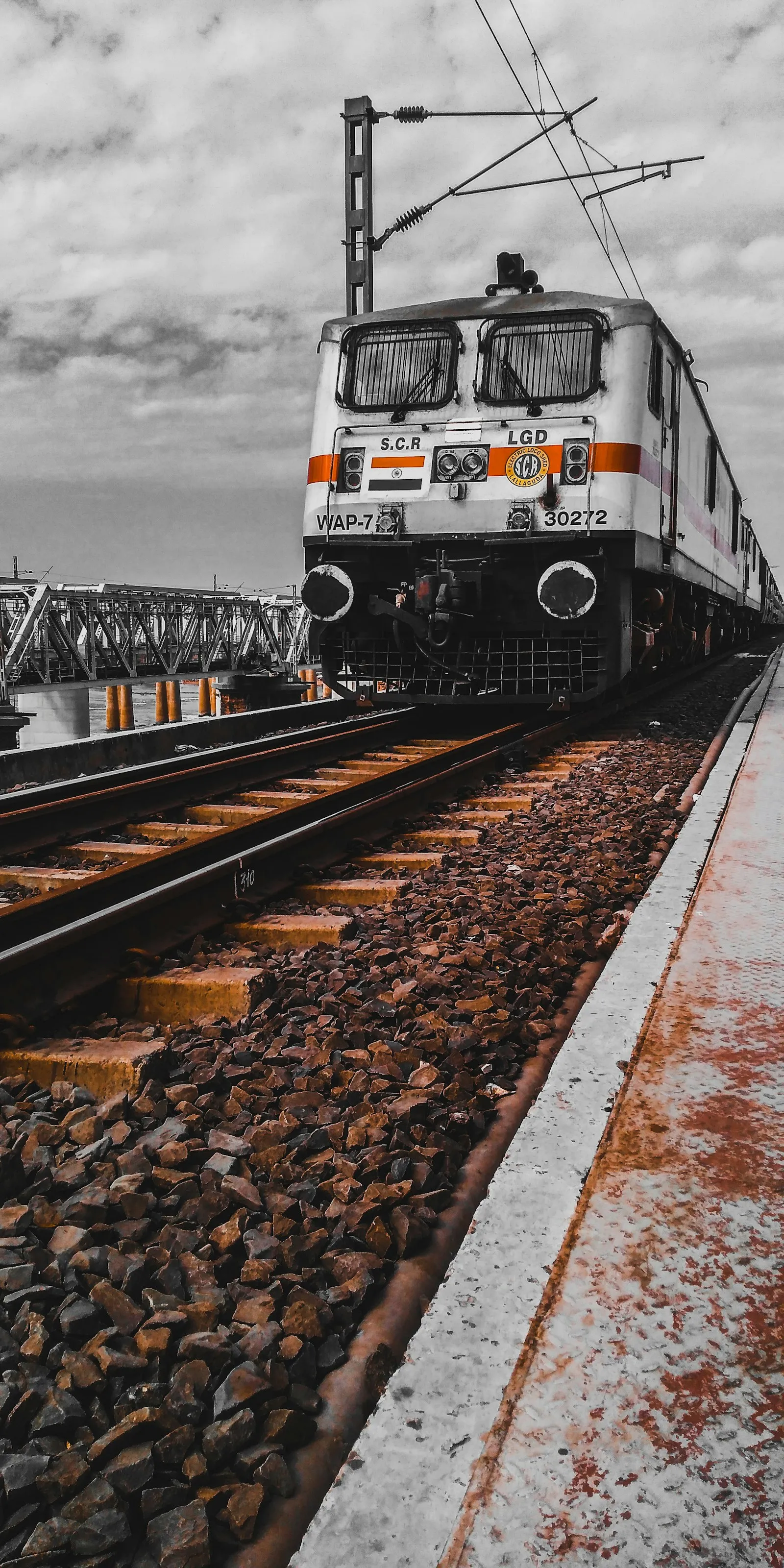
Air-conditioned train classes are the comfortable, sociable way for a solo traveller to cover distance.
How to stay connected and share your movements
Buy an Indian tourist SIM or an eSIM before or on arrival, and share your plans with someone at home. A working phone is the practical heart of solo safety: maps, cab apps, your bookings and your helplines all live on it. An eSIM is the smoothest option, active the moment you land; a local SIM is cheap but needs your passport and paperwork. Keep a power bank, use your messaging app's live-location feature on road and train days, and carry rupee cash for drivers, temples, autos and the small places that do not take cards.
What first-time solo travellers get wrong
The commonest mistakes are about pace and planning rather than danger. Solo travellers who have a hard time in India usually made one or more of these errors, all of them avoidable.
- Cramming in too many places. Three bases in two weeks is plenty on your own. Constant packing and moving is exhausting with nobody to share the load.
- Improvising transport. Street-hailed taxis at night and last-minute overnight buses are where most problems start. Book ahead and keep arrivals in daylight.
- Treating India like a cheap casual backpacking trip, then being surprised by the single-occupancy premium and the planning it really takes.
- Eating with no judgement, then losing three days to an upset stomach. Choose busy places with high turnover and fresh, hot food.
- Ignoring the advisories, or letting them scare you off the entirely safe tourist regions.
Who is solo travel in India best suited for?
Solo travel in India suits curious, reasonably confident travellers who enjoy their own company, want cultural depth rather than a checklist, and are willing to plan properly before they arrive. It is a wonderful country to travel alone if you like slow mornings, conversations with strangers and the freedom to change your mind.
It suits less well anyone who wants to wing it entirely, who finds constant visible attention draining, or who would rather ease in with a companion for a first visit. If that is you, there is no shame in it: bring a friend, or build a supported solo journey with daytime transfers and a contact in each place, which gives you independence without the raw edges. India is not a pass or fail country. It responds to how you set yourself up.
Does travelling solo mean travelling alone?
No. The best solo trips here are rich in company even when you book for one. Some of the most reassuring hours of a solo trip are the structured, people-led ones.
A guided heritage walk through an old quarter, Mylapore in Chennai, Fontainhas in Goa, Nizamuddin in Delhi or the lanes of Fort Kochi, puts a knowledgeable local beside you for a couple of hours and makes a bewildering city legible. An afternoon learning to cook in a family kitchen, five or six people around a counter with their hands in the dough, means you eat at a table rather than alone in a restaurant. And for women who would simply feel easier with a woman alongside, some cities offer experiences led by women, from a heritage walk with a local writer to a session with a female martial artist in Delhi. These local-led hours are worth building into a solo trip on purpose: they give a lone traveller company and context where it helps most.
Frequently asked questions
Is solo travel in India safe for women?
It can be, with more structure than a couple or group would need. Official advisories, both UK and US, advise women against travelling entirely alone, and that warning is serious. Solo women who travel well here rely on pre-booked rooms, known drivers, daytime arrivals, conservative dress and firm boundaries. The tourist regions are far calmer than the worst news stories suggest, but judgement and planning matter more on your own.
Which part of India is best for a first solo trip?
Kerala, in the south, is the gentlest introduction: slow, green, hassle-light and strong on homestays. South India generally, and the Golden Triangle of Delhi, Agra and Jaipur, both work well solo: short distances and dense infrastructure. Pick two or three bases rather than crossing the whole country.
How much does a solo trip to India cost per day?
Budget on roughly ₹2,500 to ₹4,500 a day, about USD 26 to 47 or GBP 20 to 35, for hostels and trains; ₹7,000 to ₹14,000, about USD 73 to 146 or GBP 55 to 109, for comfortable mid-range travel; and more again for private, fully supported trips. Remember the single-occupancy premium: a solo traveller pays for a whole room and a whole car alone.
Do I need a visa to travel solo in India?
Yes. Most nationalities need a tourist visa, and an electronic e-Visa is available online to many, including UK, US, Canadian, Australian and most European citizens. Rules, fees and validity change often, so apply only through the official Indian government portal and check the current requirements before booking flights.
Is it safe to take trains and autos alone?
Generally yes, with sensible choices. On trains, book air-conditioned classes (2A, 3A or Chair Car) and use women-only compartments where they exist. For autos and taxis, agree the fare first or use an app, and favour hotel or pre-paid transport late at night.
When is the best time for solo travel in India?
October to March is the most comfortable window across most of the country, with dry, mild weather. The summer months on the northern plains can reach 40 to 45 degrees Celsius, roughly 104 to 113 Fahrenheit. Our month-by-month guide to the best time to visit India breaks it down by region before you book.
Planning a calm solo trip of your own
Solo travel in India is not a test of nerve. It is a question of setting yourself up well, then letting the country do the rest, which it does generously for travellers who arrive prepared. Choose a narrow route, keep arrivals in daylight, book road days with people you trust, and give yourself the structure that lets you relax.
We design private, personalised India journeys for solo travellers, including solo women, built around daytime transfers, vetted drivers and a local contact in every place, so you keep the freedom of travelling alone and lose the parts that make it stressful. If you would like a solo route shaped around your own dates and pace, Plan my India trip