The honest answer to a question every first-time visitor asks: how much can one India tour actually hold, and what should you leave for next time.
In 7 days, you can do one region well. In 10, you can add a second mood with a single short flight. In 14, you can hold two distinct faces of India, with enough nights in each place to actually settle in. Most first India trips try to do too much. This guide gives you honest, route-by-route advice on what each trip length can realistically hold, with real travel times and the trade-offs nobody mentions when they hand you a packed itinerary.
Almost every India tour begins with the same quiet miscalculation. You look at a map, see a country roughly comparable in size to Western Europe, and start linking cities together the way you might across France or Italy. Then you arrive, and you feel the real scale of the place. Distances that look short on a screen become long, layered days on the ground.
Why does India take longer to travel than it looks?
Distances are large, roads are slower than the kilometres suggest, and every place asks for more of your attention than you expect. A 250-kilometre drive that might take three hours elsewhere often takes five or six here, once you factor in towns, traffic and the simple density of life along the road.
The Golden Triangle is the clearest example. Delhi to Agra to Jaipur and back covers about 720 kilometres of road, and each leg runs roughly four to six hours by car. That is why a comfortable version of even this classic loop spreads across four or five days, not two. The new expressways have helped, and the fastest trains have changed things considerably. The Vande Bharat and Gatimaan services cover Delhi to Agra in around 1 hour 30 to 1 hour 40 minutes, which can turn a long drive into an easy morning.
There is also the human pace to consider. I have watched travellers arrive in Jaipur with two hours to spare before the next transfer, rushing through the Amber Fort like a box to tick. And I have watched others spend an entire morning there, sitting on a terrace watching the light change on the walls, coming away with something harder to describe but far more worth carrying. The ones who chose fewer places and gave them time are the ones still talking about the trip a year later.
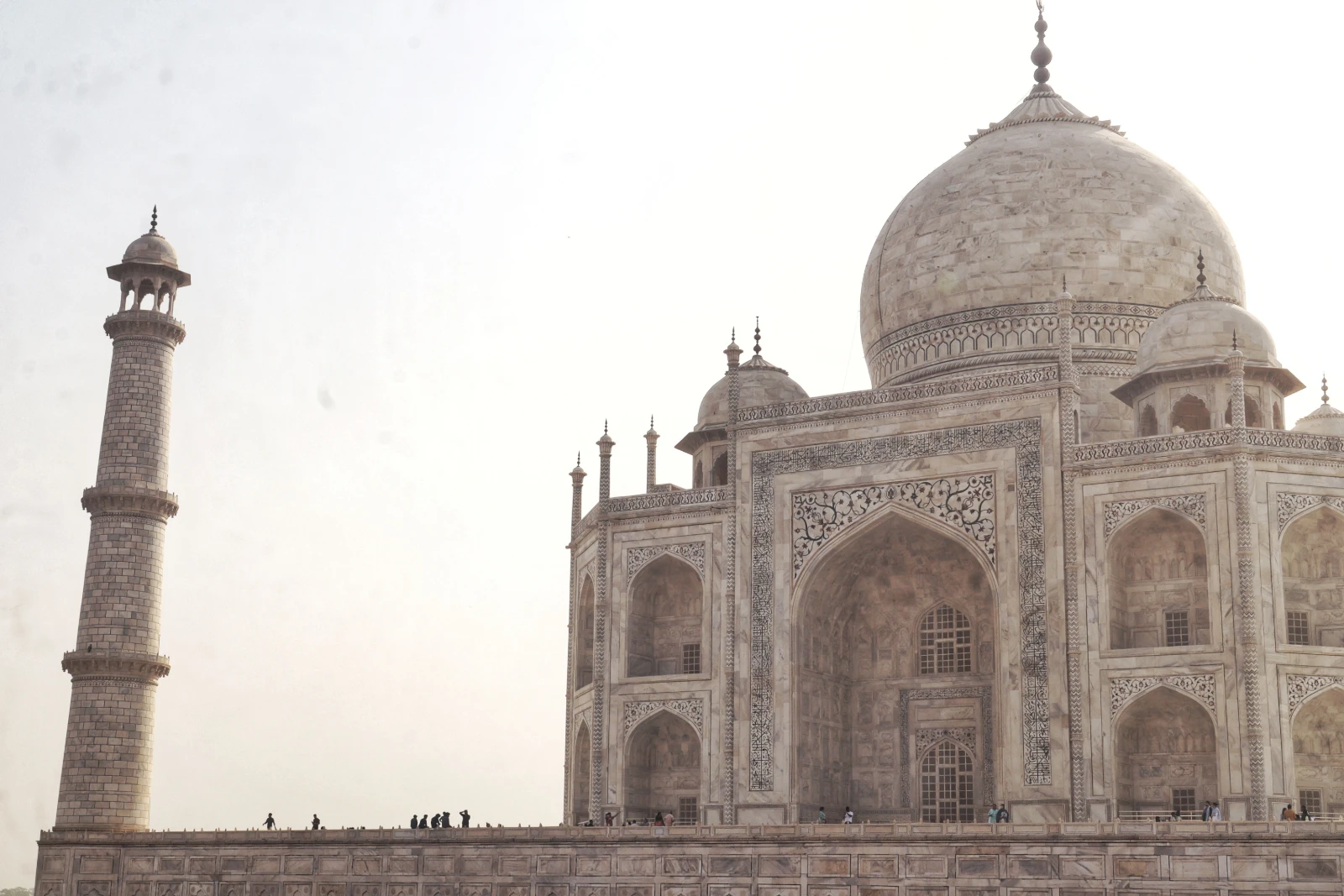
Agra, the middle point of the Golden Triangle, and a reminder that even the classics reward slower mornings.
What can you realistically do in 7 days in India?
In a week, choose one region and resist the urge to add a second. A good seven-day India trip covers three or four places with real time in each, not a checklist of nine. Build in one slower day so the journey has room to breathe.
The most popular seven-day route is the Golden Triangle: Delhi, Agra and Jaipur. It works because the three cities sit within comfortable reach of each other and together hold a remarkable concentration of history, from Mughal Delhi to the Taj Mahal to the forts and bazaars of the Pink City. A calm version looks like two nights in Delhi, a night in Agra arranged around a quiet sunrise at the Taj, then two or three nights in and around Jaipur. There is a deeper version of that week in our guide to travelling beyond the Golden Triangle.
If the Golden Triangle feels too well-trodden, a week is also enough for a focused taste of one other region:
- Kerala (South India), pairing Fort Kochi, the tea hills of Munnar and a night on a houseboat in the Alleppey backwaters. Kochi to Munnar takes around four hours by road; Munnar to the backwaters is four to five hours.
- Rajasthan (West India), choosing just two cities such as Udaipur and Jodhpur rather than stringing the whole desert together.
- Uttarakhand (North India), Rishikesh and the Himalayan foothills, where a week of yoga, the Ganga and mountain air is its own complete trip.

Fort Kochi, the coastal anchor of a focused seven-day Kerala route.
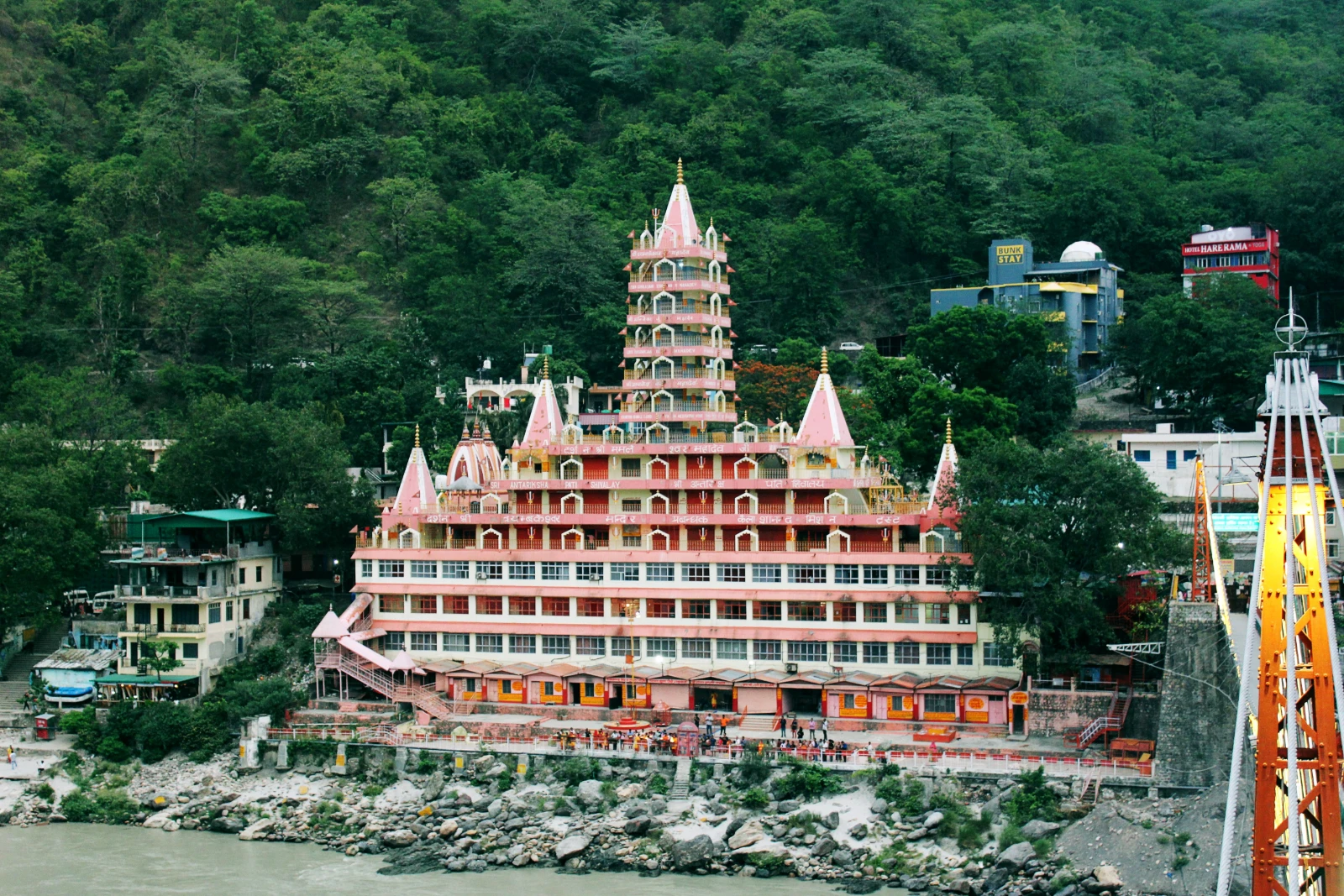
Rishikesh, a week of yoga, the Ganga and mountain air can be its own complete trip.
What seven days will not give you is two ends of the country. Flying from a northern circuit down to Kerala and back inside a week leaves you spending your time in airports rather than places. Save the contrast for a longer India trip.
What does a 10-day India tour add?
Ten days lets you keep a region's anchor and add a second, usually with one internal flight to save a long overland leg. This is the length where an India trip starts to feel layered rather than introductory.
The natural move is to take the Golden Triangle and extend it. A short flight opens up real options without eating your days:
- Add Varanasi, around 1 hour 30 minutes by air from Delhi, for two nights on the ghats of India's oldest living city. A sunrise boat on the Ganges and the evening Ganga aarti are among the most moving hours a traveller can spend anywhere.
- Add Udaipur, around 1 hour 15 minutes from Delhi by air, for the lakes, palaces and softer light of Mewar. It is the gentlest, most romantic counterpoint to the intensity of the northern cities.
- Add Ranthambore for a tiger safari, reachable by road or rail from Jaipur, if wildlife is part of the dream.
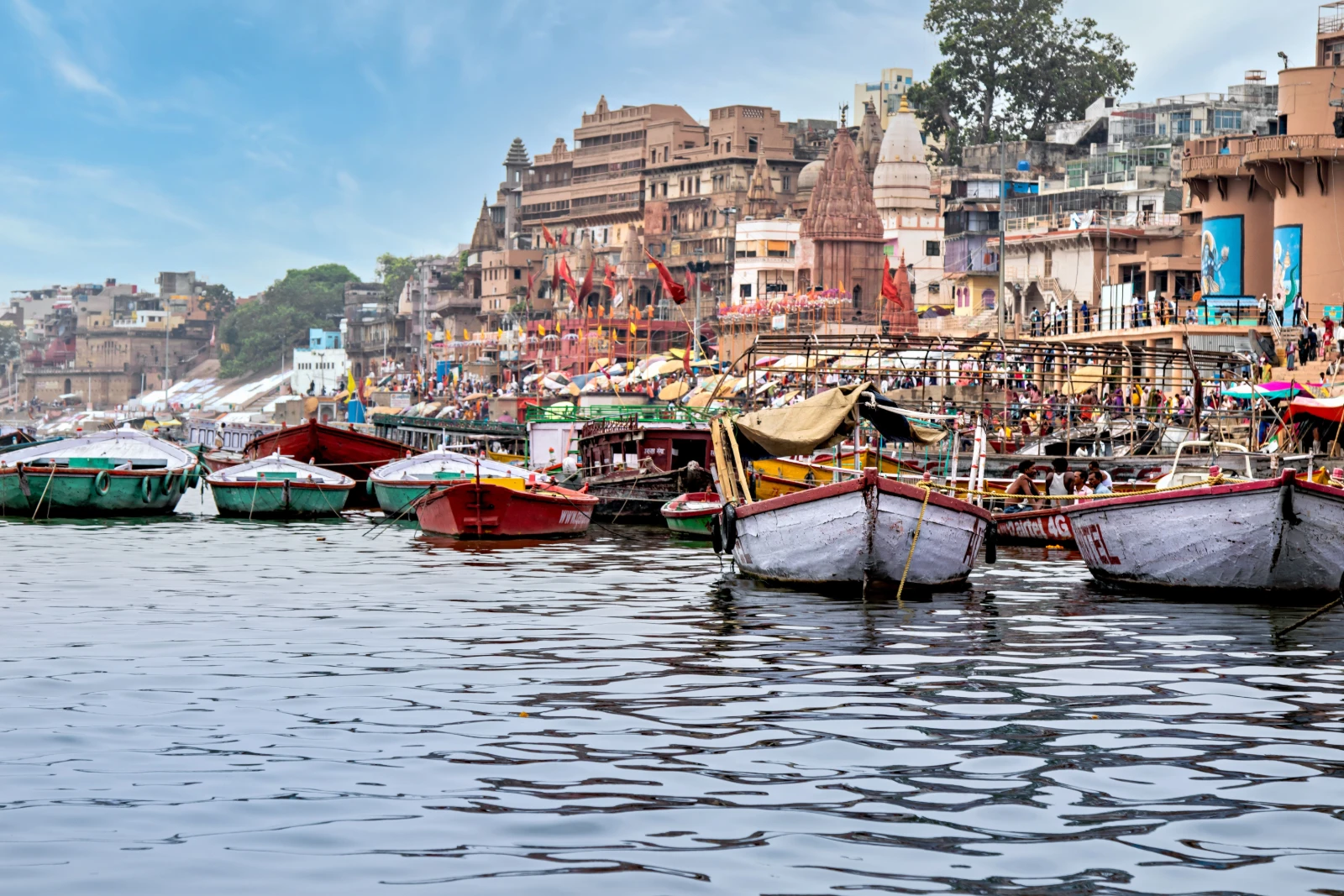
Varanasi, a sunrise boat on the Ganges and the evening aarti, added to a Golden Triangle route with one short flight.
Ten days is also enough to do Rajasthan properly rather than partially. A route through Jaipur, Jodhpur and Udaipur, Jodhpur to Udaipur is a manageable three and a half to four hours by road, gives you forts, the blue city, the desert edge and the lakes without the sense of always being in transit. Alternatively, a full ten days in Kerala turns a rushed loop into a genuine slow-wellness arc, with time for Ayurveda, the hills and the coast. A backwaters night is the natural centrepiece, and our Kerala houseboat guide covers how to book one well.
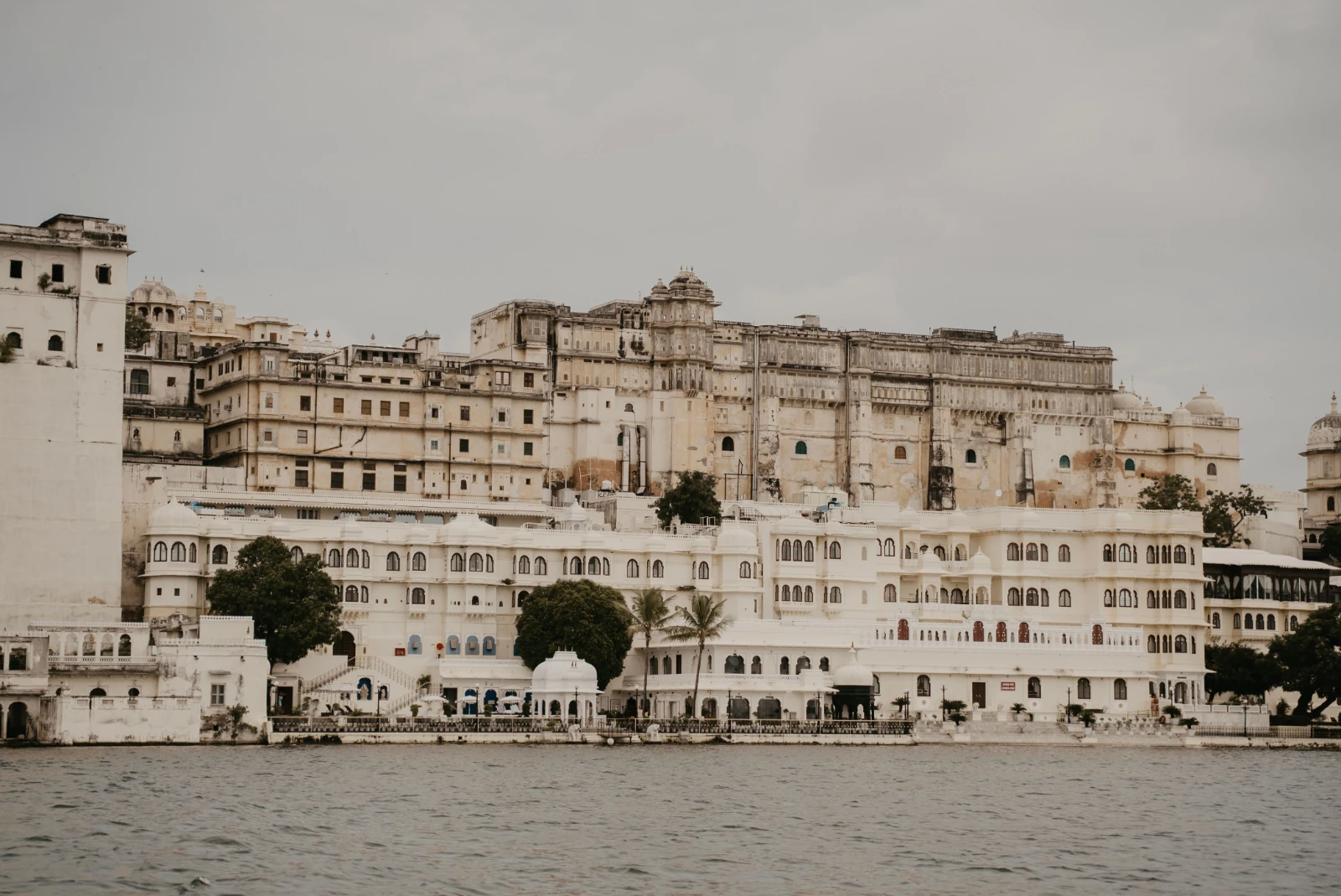
Udaipur, the gentlest, most romantic counterpoint to the intensity of the northern cities.
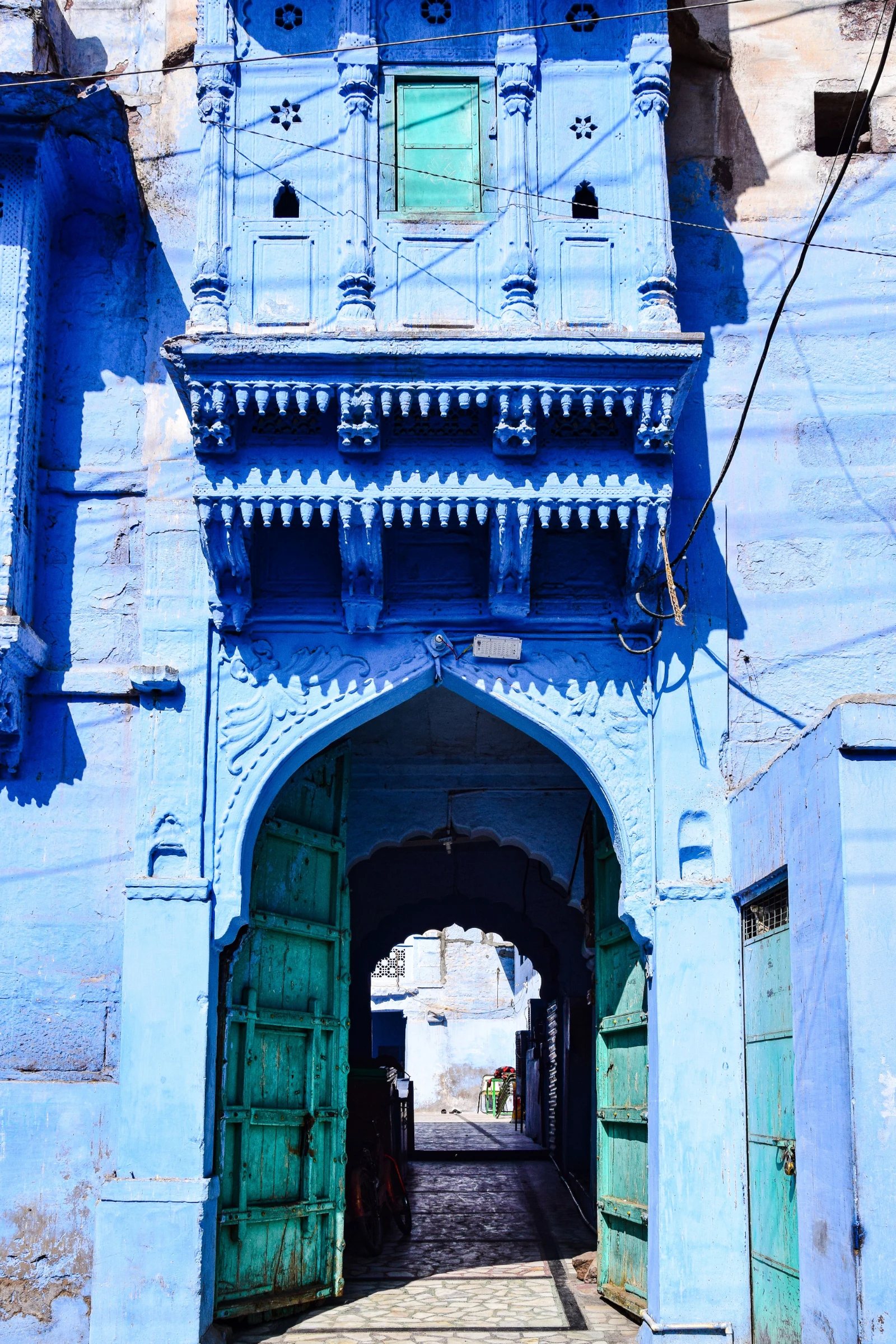
Jodhpur, the blue city, roughly three and a half to four hours from Udaipur by road.
The honest trade-off at ten days: you still cannot comfortably hold both the deep north and the deep south. You can taste a contrast, but if you want two whole halves of India, you want two weeks.
If this is a lot to work out alone, it is exactly what we do. Tell us your dates, who is travelling and what matters to you, and we reply within 24 hours with a first private itinerary that takes care of the right route for the days you have. Plan my India trip.
How far can you really go in 14 days?
Two weeks is the first trip length that feels truly generous. You can do two distinct parts of India, with internal flights linking them and enough nights in each place to actually settle in. This is the sweet spot for a first India tour. Our fourteen-day north India itinerary shows what that looks like day by day.
There are three routes I return to again and again at fourteen days:
- North then south. A week across Delhi, Agra and Rajasthan, then a flight down to Kerala for backwaters, hills and the slower coastal rhythm. Delhi to Kochi is around three hours ten minutes in the air, which makes this far easier than it sounds. You come home having seen what feels like two countries inside one.
- The classic north, done properly. Delhi, the full Rajasthan circuit of Jaipur, Jodhpur, Jaisalmer and Udaipur, then a flight to Varanasi to end on the Ganges. This is the grand first-timer's loop, and two weeks is exactly the time it needs.
- A themed deep dive. Two weeks of wellness from Rishikesh down through Kerala; two weeks tracing the Himalayan routes up towards Ladakh; or two weeks of South India through Tamil Nadu's temple towns into Kerala's coast. Choosing a thread is where the best long India trips live.
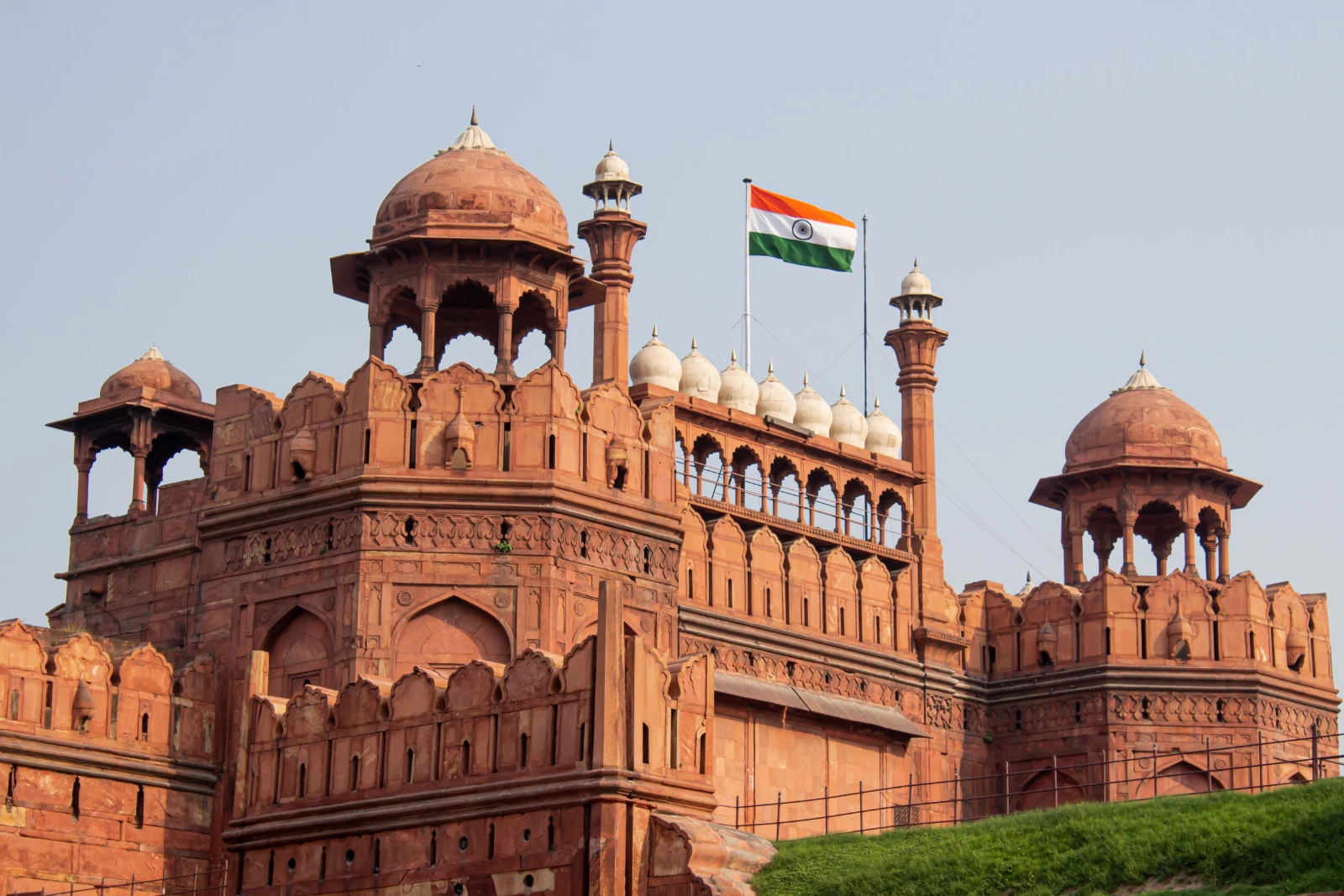
Delhi, the starting point for most of the classic fourteen-day routes, north or north-then-south.
Even with fourteen days, the temptation is to add a fifth and sixth city. Go the other way. Two weeks in five or six places, with two or three nights in each, almost always beats the same fortnight chopped into nine one-night stops. No trip covers India. The goal is to know a few corners of it well enough that they stay with you.
Which trip length suits which kind of traveller?
If you are short on time and want the headline experiences, seven focused days are enough. If you want one classic plus one surprise, ten days is the comfortable middle. If this might be your only India tour for a while, or you already know you travel slowly, give it fourteen.
| Trip length | A focused route | What it really gives you |
|---|---|---|
| 7 days | Delhi, Agra, Jaipur + one quieter night | The classic first taste, one region, no rushing between flights |
| 10 days | Golden Triangle + Varanasi or Udaipur | A second mood: the sacred Ganges or the lakes of Mewar |
| 14 days | North + a southern week, or deep Rajasthan | Two faces of India, with room to slow down and stay put |
Every one of these can be made slower or richer. They are frames, not fixed packages.
Should you cover more ground or go deeper?
Go deeper, almost every time. The single most common feeling I hear from travellers after they get home is not that they missed a city, but that they did not stay long enough in the ones they reached. Depth is where India stops being a sequence of sights and starts being a place you have actually met.
Depth does not mean doing less. It means trading the third fort of the day for a morning with a block-printing family in Bagru, or swapping a long transfer for an unplanned afternoon in a neighbourhood where no one is trying to sell you anything. The difference between watching the Ganga aarti from a crowded step and watching it from a quiet boat with someone who can tell you what you are seeing, that gap is real, and it is entirely a matter of pace.
The travellers still talking about their India trip a year later are almost never the ones who saw the most cities. They are the ones who gave a few places real time.
North or South India: which suits your trip length?
For seven days, pick one. The north gives you Mughal monuments, Rajasthan's forts and the drama most people picture when they think of India. The south is greener, slower and gentler, built around temples, backwaters, coastline and Ayurveda. Neither is better. They simply ask for a different mood.
At ten days you can still only really do one well, though a contrasting city reached by a short flight gives the trip a second texture. At fourteen days the north-then-south route finally lets you hold both, and the difference between them becomes part of the story rather than a compromise.
If you are unsure which half to start with: the north tends to suit first-time visitors who want the icons, the Taj, the forts, the markets of Jaipur and Jodhpur. The south rewards those who already know they prefer quiet over spectacle, or who are coming specifically for wellness, temples and coast.
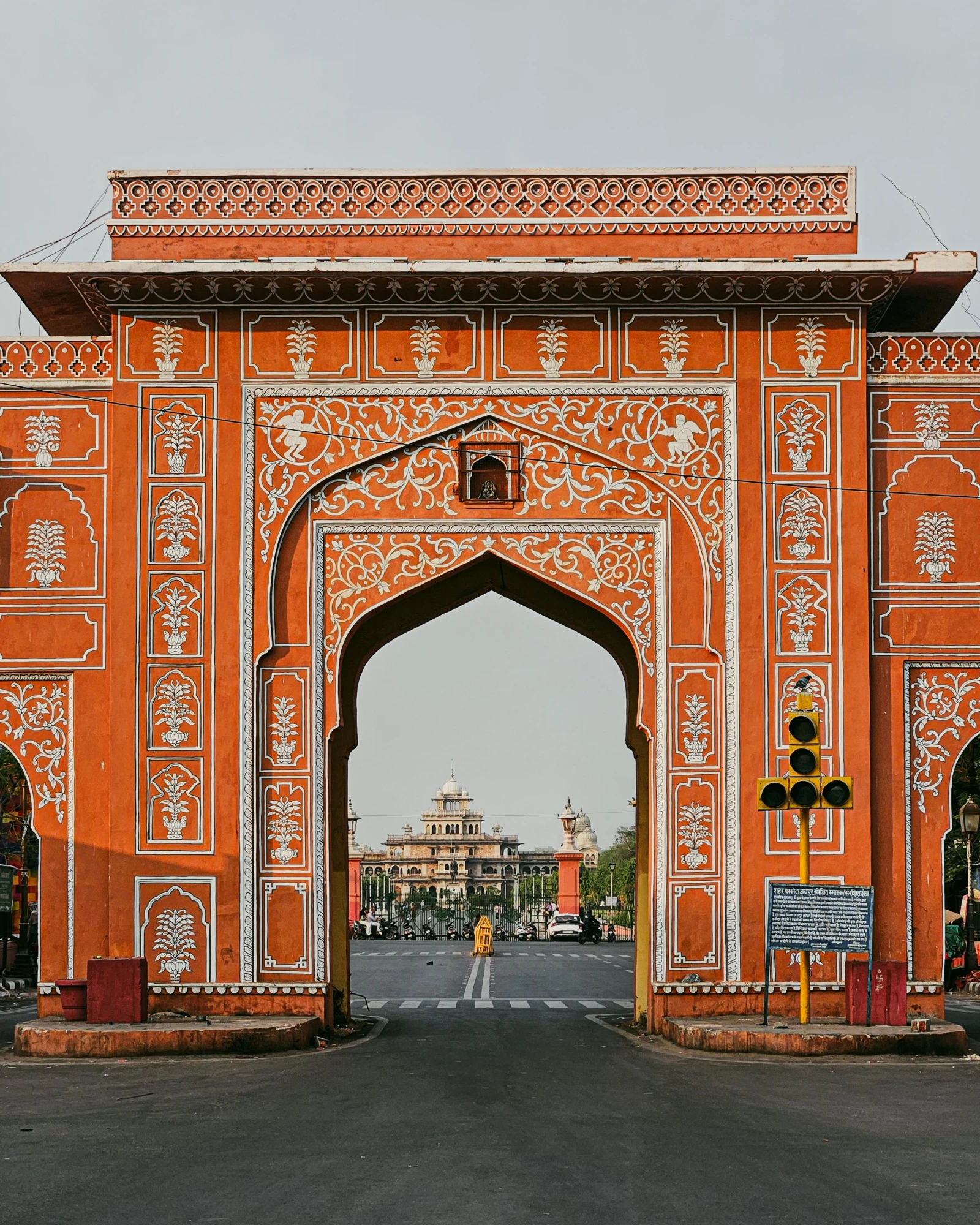
Jaipur, icons and markets for first-time visitors who want the north's drama.
How to plan your India tour: trains, flights or car?
Use all three, matched to the distance. Short, scenic legs are often best by train or private car; anything that would otherwise be a full day on the road is worth a short domestic flight. The right mix is what keeps a tight India itinerary from turning into a transit schedule.
- Trains. India's railways are an experience in themselves and the fast services are genuinely good. The Vande Bharat or Gatimaan from Delhi to Agra takes 1 hour 30 to 1 hour 40 minutes and is far more pleasant than the drive. Book the better classes well in advance, good trains fill up. IRCTC is the official booking platform.
- Private car with a driver. For Rajasthan and Kerala, a car and driver is the easy, flexible choice. You stop where you like, you are not navigating, and the cost is reasonable when shared. Expect realistic leg times of four to six hours on the longer Rajasthan stretches, and around four hours for the Kochi to Munnar road.
- Domestic flights. For the big jumps, north to south, or Delhi to Varanasi, fly. Delhi to Kochi is around three hours ten minutes; Delhi to Udaipur around 1 hour 15 minutes; Delhi to Varanasi around 1 hour 30 minutes. A morning flight can buy you a whole extra day in a place worth having one.
If you are a foreigner travelling to India (especially for the first time), we generally recommend avoiding trains.
When is the best time for a 7, 10 or 14-day India trip?
For most of the classic routes, the comfortable window runs roughly October to March, when the north and central plains are cool and clear. The Himalayan high country and Ladakh open up in summer (broadly May to September), while the monsoon, roughly June to September across most of the country, transforms the hills and the south into something lush and quiet, though it makes some overland routes slower and certain roads impassable.
Trip length matters here too. A two-week itinerary crossing regions gives you more room to work with good weather; a single-region week ties your timing more tightly to that one place. Seasons in India are regional, not national, so the best time depends as much on where you go as when. Plan your route and your season together rather than separately. Our month-by-month guide to the best time to visit India sets out the regional windows.
How much should you budget for an India tour?
India stretches across every budget, which is part of its appeal. The same route can be travelled simply or in real comfort, and the difference shows up mostly in where you sleep and how you move between places, not in what you see.
A well-run mid-range India trip, good boutique stays, private transfers, a few standout guided experiences, typically runs in the range of USD 150 to 250 per person per day, before international flights. Go simpler and that figure falls considerably; add heritage palaces and private guiding and it rises.
The most common pacing mistakes on a first India tour
Most first itineraries fail in the same few ways, and all of them come from underestimating how full an India trip already is. The fix is almost always to remove something rather than add it.
- Too many cities. Five or six one-night stops in a week feels productive on paper and exhausting in person. You spend your mornings packing and your afternoons in transit. Cut a stop and give the time back to the places that earn it.
- Ignoring arrival and jet lag. The first day rarely belongs to sightseeing. Build a soft landing into your first city so a long-haul flight does not steal the start of your trip. A slow afternoon, a decent meal and an early night will pay dividends for the rest of the journey.
- Driving what you should fly. A long overland leg to save the price of a domestic flight often costs you a full day. On a tight itinerary, that is the most expensive saving you can make.
- No empty afternoons. The best moments on an India tour are usually unplanned, a conversation in a chai stall, a market stumbled into, a rooftop at dusk with no particular agenda. Leave gaps on purpose.
Avoid these four and almost any length of trip, from a week to a fortnight, will feel calmer and fuller than a packed version twice its size.
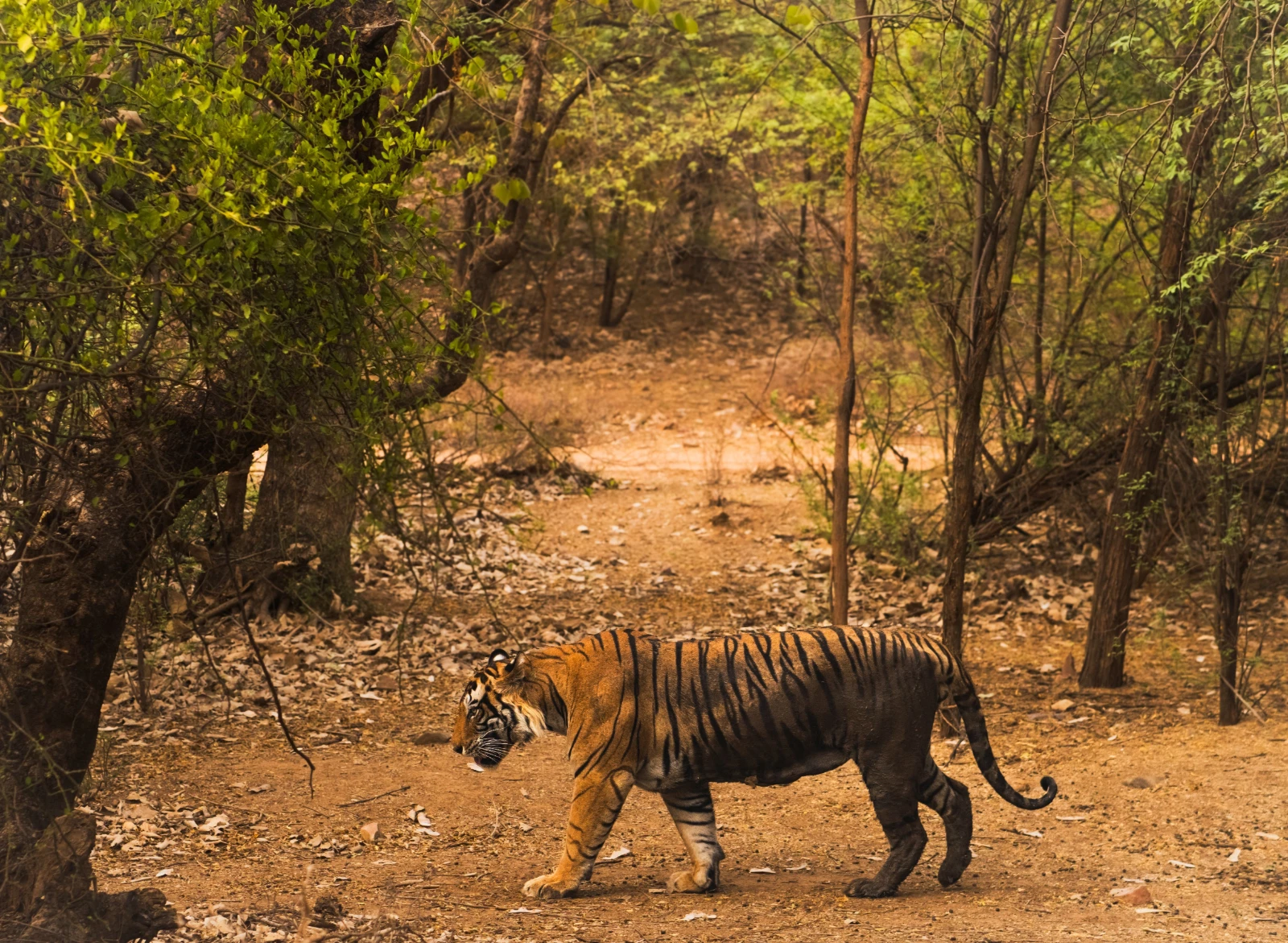
Ranthambore, often a worthwhile add for a ten-day trip, reachable by road or rail from Jaipur.
Frequently asked questions
Is 7 days enough for a first trip to India?
Yes, for one region. A week is enough if you focus on a single circuit such as the Golden Triangle or Kerala rather than trying to cross the country. Keep it to three or four places and build in one slower day.
Can you see North and South India in 10 days?
Not comfortably. Ten days is better spent on one region plus one contrasting city reached by a short flight, the Golden Triangle with Varanasi or Udaipur, for example. To travel both the deep north and the deep south, give yourself fourteen days.
What is the best 14-day India itinerary for first-timers?
A week across Delhi, Agra and Rajasthan, then a flight south to Kerala for backwaters and hills, is the most satisfying two-week route. The classic alternative is the full northern loop ending on the Ganges in Varanasi.
When is the best time to visit India?
Broadly October to March for the north and central routes, summer for the Himalayas and Ladakh, and the monsoon months for a lush, quieter south. Seasons are regional, so plan your route and your timing together.
How many places should I include per week?
Three to four per seven days, with two or three nights in the ones that matter most. Fewer stops with longer stays almost always make for a better India trip than a packed checklist.
Do I need a visa for India?
Most international travellers need a visa. India's e-Visa scheme covers many nationalities and can be applied for online. Check eligibility and apply through the official Indian e-Visa portal and allow at least four business days before travel.